
What lock-up stage includes depends on the document that defines it. South Australia’s consumer guide lists the floor, walls, roof, eaves, doors, windows and some services. For major domestic building contracts in Victoria, section 40 of the Domestic Building Contracts Act 1995 has a statutory definition. This note found no stage definition in the South Australian sources it could read; the contract and current law need checking.
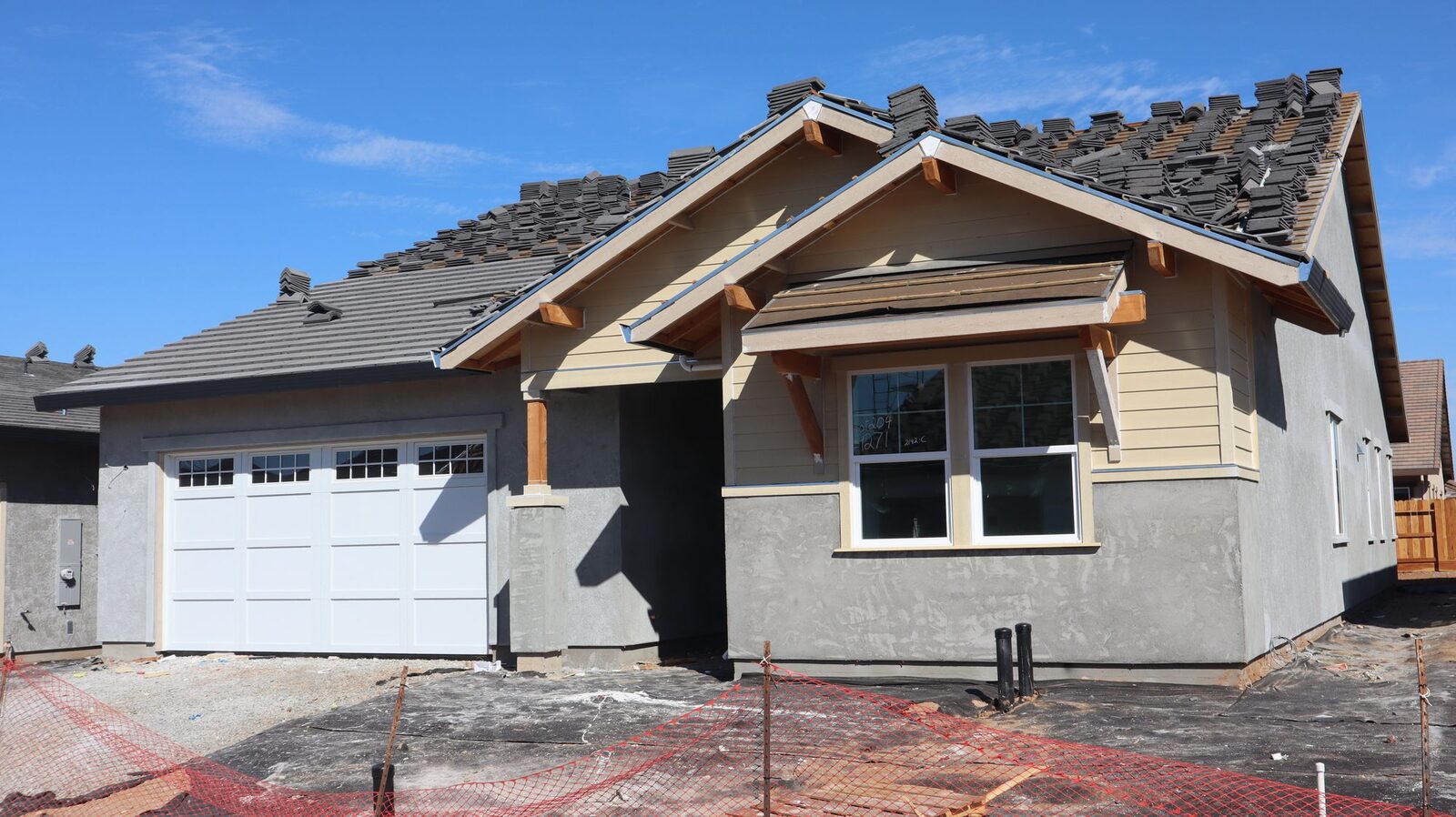
What is lock-up stage?
What lock-up includes depends on the document that defines it. The note on the stages of a build describes it in general terms as the point at which a house can be closed and secured. That is a description, not a legal test.
In South Australia, the January 2025 consumer guide from Consumer and Business Services (CBS) says: “Lock-up stage includes the floor, walls, roof, eaves, doors and windows, as well as some electrical, gas fitting and plumbing.” That is one sentence in a consumer guide, read as an Internet Archive copy. It is not a statutory definition, and it does not say what a particular contract means.
Victoria has a statutory wording for major domestic building contracts. Section 40(1) of the Domestic Building Contracts Act 1995 (Vic), Authorised Version No. 094 as at 1 July 2026, defines lock-up stage as “the stage when a home’s external wall cladding and roof covering is fixed, the flooring is laid and external doors and external windows are fixed (even if those doors or windows are only temporary)”.
That definition is written “In this section”, meaning for section 40, which limits progress payments under major domestic building contracts in Victoria. It is Victorian law, quoted here because it is a precise public wording. The two wordings differ: the CBS sentence mentions eaves and some services, and the Victorian one deals with temporary doors and windows.
What does frame stage include?
For major domestic building contracts in Victoria, section 40(1) defines frame stage in one line: “the stage when a home’s frame is completed and approved by a building surveyor”. Consumer Affairs Victoria’s stage table states the same test.
The same subsection defines base stage in five cases, mostly by type of floor. For example, for a home with a concrete floor, it is “the stage when the floor is completed”, and for a suspended concrete slab floor, it is “the stage when the concrete footings are poured”.
For a South Australian house, the contract for that job is the document to read on frame stage. The CBS guide does not describe it. The stages note describes the frame in general terms as wall frames, any upper floor structure, and the roof trusses or rafters.
What is the fixing stage definition?
For major domestic building contracts in Victoria, section 40(1) defines fixing stage as “the stage when all internal cladding, architraves, skirting, doors, built-in shelves, baths, basins, troughs, sinks, cabinets and cupboards of a home are fitted and fixed in position”.
The list is a statutory one, and it does not mention painting, tiling or the fit-off of power points and tapware. The stages note, describing the work on site in general terms, includes those items in fixing. The two are different kinds of description, which is why the wording of the document in front of the reader matters more than the stage name. The CBS guide does not describe fixing stage.
Does South Australia define lock-up or fixing stage?
This note did not find a South Australian statutory definition, and it does not say that none exists. The nearest South Australian wording it found is the single CBS sentence on lock-up.
What was checked: a copy of the Building Work Contractors Act 1995 (SA) consolidated to 1 January 2024, held by the Internet Archive, in which the terms lock-up, frame stage, fixing stage and base stage do not appear; the prescribed Form 1 notice in its September 2024 version, which does not use them either; and the Law Handbook’s page on building work contracts, published by the Legal Services Commission of South Australia, which does not define them.
What could not be read: the current Act, which has changed since that copy; the Building Work Contractors Regulations 2026 (SA); and the current Form 1. A reader who needs a firm answer can check those, or ask a lawyer.
What should an SA contract say about lock-up and fixing?
The contract is the place to read what each stage includes on that job. The Law Handbook records that a domestic building work contract that is not minor domestic building work, a threshold it records as raised on 10 November 2025, must “set out all of the terms of the contract” (section 28). If a contract uses a stage name without defining it, that is a point for legal advice.
Questions worth answering from the contract’s wording include which items make up lock-up and fixing, whether temporary doors or windows count, whether flooring is part of lock-up, whether a garage is treated with the house, and which trades’ work sits in fixing and which comes after it.
Where payments are tied to stages, these definitions also bear on when a stage has been reached for payment. The contract’s wording is read with section 30 of the Building Work Contractors Act 1995 (SA); the note on progress payments sets out what the sources read say about it.
Is there a lock-up stage inspection?
In the South Australian legislation and guidance read for this note, no statutory inspection is named as a lock-up inspection. CBS says only: “Your local council may carry out inspections and discuss building practices with your builder at various stages of the building work.”
Regulation 93, as set out in the note on council notifications, lists notification points during building work and does not name lock-up. It does allow stages to be specified by the council or relevant authority, so a particular approval may name one, and the project’s decision notice is where to look. Regulation 93 deals with notifying the council, not with inspections. Section 144 of the Planning, Development and Infrastructure Act 2016, as that note sets out, deals with council inspections through a practice direction, which was not read for this note. Whether a stage is inspected is a matter for the council under it.
A contract can also set its own inspection points. CBS says an owner can engage an independent building consultant to carry out inspections “at key stages in the building process”, and that “it’s best to discuss this with your builder”. The handover note says that, at handover, it is worth confirming this with the builder beforehand.
Victoria’s guidance is written for Victorian owners: before each progress payment, Consumer Affairs Victoria says to check the work “has passed the building surveyor’s inspection”, “meets your contract requirements” and “is complete”. Those checks refer to Victoria’s system.
Will the Victorian definitions change?
They may, for Victorian contracts. Consumer Affairs Victoria reported on 15 September 2025 that the Domestic Building Contracts Amendment Act 2025 would take effect by 1 December 2026, and that “progress payment stages” can be set in regulations. The wording quoted here is from the version as at 1 July 2026.
Common Questions
What is lock-up stage?
What lock-up stage includes depends on the document that defines it, and no single national definition appears in the sources read for this note. The January 2025 consumer guide from South Australia’s Consumer and Business Services says lock-up stage includes the floor, walls, roof, eaves, doors and windows, as well as some electrical, gas fitting and plumbing. For major domestic building contracts in Victoria, section 40(1) of the Domestic Building Contracts Act 1995 defines it as the stage when a home’s external wall cladding and roof covering is fixed, the flooring is laid and external doors and external windows are fixed, even if those doors or windows are only temporary. For a particular job, the building contract is the document to read.
What is included in lock-up stage in South Australia?
The January 2025 consumer guide from Consumer and Business Services says lock-up stage includes the floor, walls, roof, eaves, doors and windows, as well as some electrical, gas fitting and plumbing. That is consumer guidance, not a statutory definition. This note found no South Australian statutory definition in a copy of the Building Work Contractors Act 1995 (SA) consolidated to 1 January 2024 or in the Law Handbook, but it could not read the current Act or the Regulations 2026. The building contract for that job is the document to read, and if it does not define the stage, that is a point for legal advice.
What is the fixing stage definition?
For major domestic building contracts in Victoria, section 40(1) of the Domestic Building Contracts Act 1995 defines fixing stage as the stage when all internal cladding, architraves, skirting, doors, built-in shelves, baths, basins, troughs, sinks, cabinets and cupboards of a home are fitted and fixed in position. That wording is Victorian. For a house in South Australia, the building contract for that job is the document to read, and if it does not define the stage, that is a point for legal advice.
What does frame stage include?
For major domestic building contracts in Victoria, section 40(1) of the Domestic Building Contracts Act 1995 defines frame stage as the stage when a home’s frame is completed and approved by a building surveyor. For a house in South Australia, the building contract for that job is the document to read, and if it does not define the stage, that is a point for legal advice.
Is there a mandatory lock-up stage inspection in South Australia?
This note found no statutory inspection named as such. Regulation 93 of the Planning, Development and Infrastructure (General) Regulations 2017 (SA), as set out in the site’s note on council notifications, deals with notifying the council, does not name lock-up, and allows stages to be specified by the council or relevant authority. Section 144 of the Planning, Development and Infrastructure Act 2016, as that note sets out, deals with council inspections through a practice direction, which was not read for this note. Whether a stage is inspected is a matter for the council under it. The decision notice, the contract and the council are the places to check.
Sources
- Consumer and Business Services — Building, extending & renovating a home: A consumer guide (January 2025), Internet Archive copy, pages 20 and 21Accessed 2026-11-02
- Domestic Building Contracts Act 1995 (Vic), Authorised Version No. 094, as at 1 July 2026 — section 40(1)Accessed 2026-11-02
- Consumer Affairs Victoria — Deposits and payments for building workAccessed 2026-11-02
- Consumer Affairs Victoria — New domestic building contract laws passed in Victoria (15 September 2025)Accessed 2026-11-02
- Form 1 — Your building contract: your rights and obligations (September 2024 version), Internet Archive copyAccessed 2026-11-02
- Law Handbook, Legal Services Commission of South Australia — Minor Domestic Building WorkAccessed 2026-11-02
- Building Work Contractors Act 1995 (SA), version 1.1.2024, Internet Archive copy (not the current version)Accessed 2026-11-02
- Law Handbook, Legal Services Commission of South Australia — Building Work Contracts (page marked last revised 20 February 2025)Accessed 2026-11-02
This page describes legislation as it stood on the access dates above. It is not legal advice about any particular property.
Planning a rebuild or new build in Adelaide? Start with a free initial consultation.