
The whole-of-home energy budget is the energy usage requirement for a new house in NCC 2022. Performance Requirement H6P2 limits the energy value of the domestic services to 70% of a benchmark set of equipment. Under H6D2(2), the Deemed-to-Satisfy routes are a Whole of Home rating of at least 60 under S42C3 together with Part 13.7 under S42C4(2), or compliance with Parts 13.6 and 13.7 for a building with a total floor area not greater than 500 m². Part 13.6 counts main heating and cooling, the main water heater and pool and spa pumps, less on-site solar.
What are the whole-of-home energy requirements in NCC 2022?
Performance Requirement H6P2(1) of NCC 2022 Volume Two states that “The energy value of a building’s domestic services must not exceed 70% of the energy value” of a reference set: a 3-star ducted heat pump heating all heated spaces, a 3-star ducted heat pump cooling all cooled spaces (both rated under the 2019 GEMS determination), a 5-star instantaneous gas water heater rated under the 2017 GEMS determination providing all domestic hot water, and “a lighting power density of 4 W/m2” serving all artificially lit internal spaces.
The NCC Glossary defines domestic services as including “heating, air-conditioning, mechanical ventilation and artificial lighting”, “pumps and heaters for swimming pools and spa pools”, “heated water systems” and “on-site renewable energy equipment”, and states that they exclude “cooking facilities and portable appliances”.
PlanSA describes the change as “a new whole-of-home annual energy use budget to guide the selection of more efficient building systems such as heating and cooling equipment, hot water systems, lighting and swimming pool and spa pumps.” It states that the NCC 2022 modern homes provisions “commence in South Australia on 1 October 2024.” The South Australian concessions, set out in Ministerial Building Standard MBS 007, are covered in the 7 star note.
Whole of Home rating or the Part 13.6 calculation?
Clause H6D2(2) gives two Deemed-to-Satisfy routes for H6P2. The first is “complying with S42C3 using house energy rating software and S42C4(2)”. Clause S42C3 states: “A building must achieve a whole-of-home rating of not less than 60 using house energy rating software.” The second is “complying with Parts 13.6 and 13.7 of the ABCB Housing Provisions for a building with a total floor area not greater than 500 m²”. A Performance Solution is the other route; clause H6D1(2) sets out how the relevant Performance Requirements are determined where one is proposed.
NatHERS describes its Whole of Home rating as running from 0 to 100 and over: “A score of 100 means the home is net zero.” It adds: “Ratings above 100 (up to a maximum of 150) are possible.”
The two routes are related but not identical. The ABCB Housing energy efficiency handbook states that the Part 13.6 calculations “are consistent with but provide slightly different outcomes to WOH ratings using NatHERS software tools”, because NatHERS uses hourly calculations for a full year while the Deemed-to-Satisfy calculation approximates them.
What does the whole-of-home energy budget count?
Clause 13.6.2(1) of the NCC 2022 Housing Provisions requires that the net equivalent energy usage of a building, calculated in accordance with (a), “must not exceed the allowance calculated in accordance with (b)”. The usage side is (A × EE) + EP + ES − ER, where A is a floor area factor, EE is “the main space conditioning and main water heater efficiency factor” from the ABCB Standard for Whole-of-Home Efficiency Factors, EP and ES are swimming pool and spa pump energy usage, and ER is “the installed capacity of on-site photovoltaics (kW)”. The allowance is A × EF, where EF is an energy factor from Table 13.6.2b.
The Glossary defines main space conditioning as the heating or cooling equipment “that serves at least 70% of the conditioned space of a dwelling”, with a rule for when no single unit does. The main water heater is “the domestic hot water unit in a dwelling that is connected to at least one shower and the largest number of hot water outlets.”
The ABCB Standard says its factors “must be obtained from the appropriate table given the dwelling’s climate zone, jurisdiction and equipment types”. Its tables are set out by climate zone and state, by main heater and main cooler, and by type of water heater. Lighting is not a term in the 13.6.2 formula; it is dealt with in Part 13.7, described below. The handbook notes that portable appliances and equipment are excluded.
What are the South Australian figures in Part 13.6?
These are the Deemed-to-Satisfy figures in Part 13.6 of the NCC 2022 Housing Provisions. Table 13.6.2b gives the energy factor EF by climate zone and state. For South Australia it lists 1.86 in climate zone 4, 1.79 in climate zone 5 and 2.51 in climate zone 6, with no entry for the other zones. Table 3 in the Glossary lists Adelaide as climate zone 5; the zone for a particular address is confirmed on the ABCB Climate Map.
Table 13.6.2a gives the floor area adjustment factor, which is multiplied by the total floor area to give A and falls as the house gets larger: 0.0106 for 100–109 m², 0.0093 for 200–209 m² and 0.0075 at 500 m². Its notes say total floor area “is measured within the inside face of the external walls of the Class 1 building and includes any conditioned, attached Class 10a building.” For illustration of the arithmetic only, the allowance for a 200 m² house in climate zone 5 in South Australia is 200 × 0.0093 × 1.79, or about 3.33. Whether a design fits within it depends on the factors for its own equipment.
Pool and spa pumps are added separately. For South Australia, Table 13.6.2c gives a pool pump factor of 0.068 for a pump that is 1 star or unrated, falling to 0.008 for a 10 star pump, applied per 1000 litres of pool volume; Table 13.6.2d gives a spa pump factor of 0.081, applied per 100 litres.
| Climate zone | Energy factor (EF), South Australia |
|---|---|
| Zone 4 | 1.86 |
| Zone 5 | 1.79 |
| Zone 6 | 2.51 |
How do solar panels count in the whole-of-home calculation?
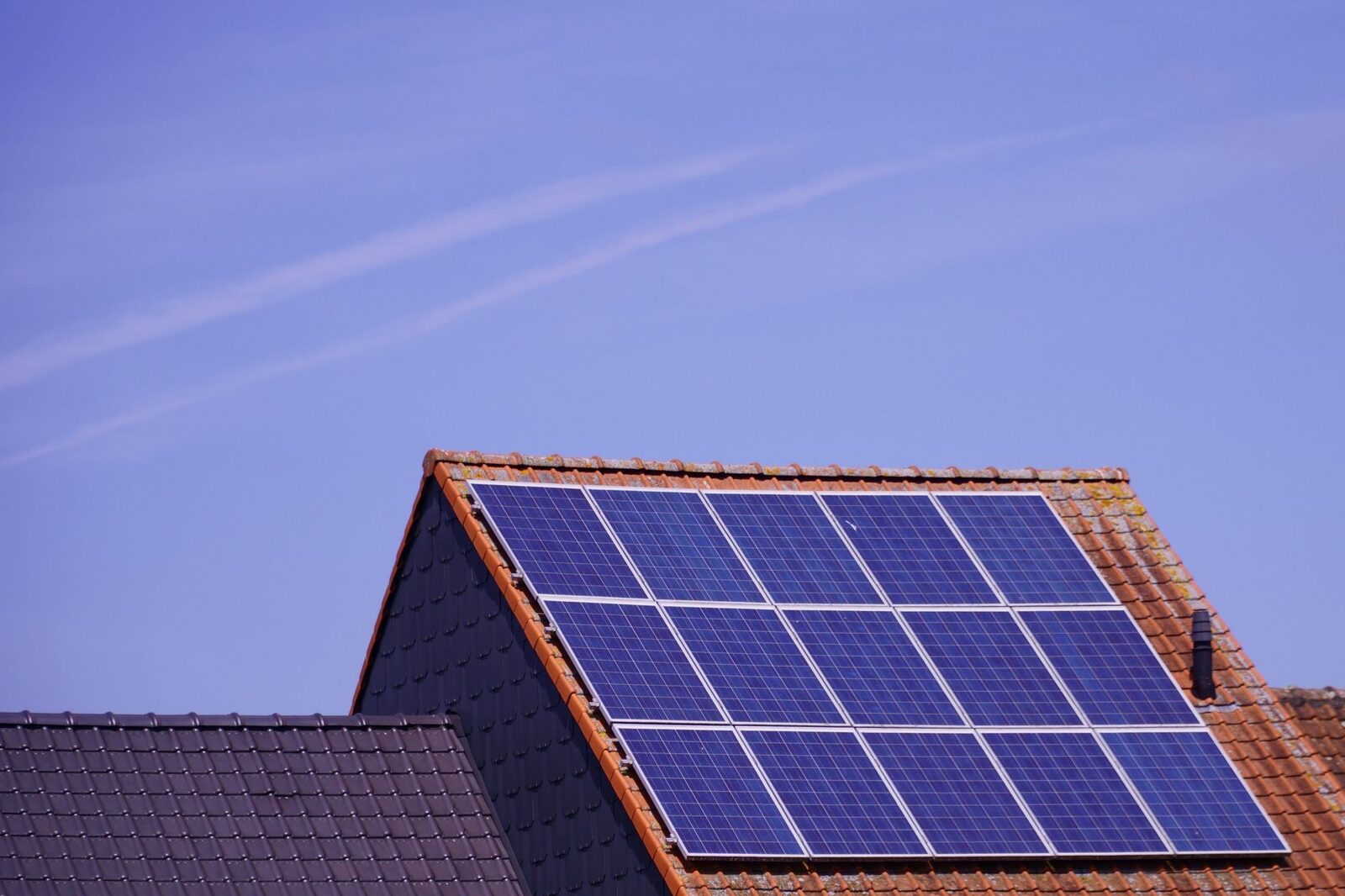
In the 13.6.2 formula, the installed capacity of on-site photovoltaics, in kW, is subtracted from the usage side. The ABCB Standard for Whole-of-Home Efficiency Factors states its own scope in section 2.1: it “only covers the range from 1 kW to 10 kW of equivalent photovoltaic (PV) capacity. Beyond this scope, an alternative compliance option must be used”. The same section says that where a table shows “X”, “this particular combination of equipment is beyond the scope of this ABCB Standard”, and other compliance options must be considered.
The ABCB handbook lists what it calls “clear trends” in the calculation. They include: “If rooftop solar PV of at least 3 kW is included in a house design, there is considerably more flexibility in the type, fuel and efficiency of heating, cooling and heated water appliances”, and “If a dwelling has a swimming pool, it is far more likely that rooftop solar PV is required to meet Part 13.6.” These are the handbook’s general observations, not clauses, and they do not settle whether a particular design complies.
What does Part 13.7 add to the energy budget?
The elemental route needs both Parts. The handbook’s alert states that Part 13.6 and Part 13.7 “both contain requirements for a house’s domestic services and both parts need to be met.” On the software route, S42C4(2) also requires Part 13.7 alongside the Whole of Home rating.
Part 13.7 of the NCC 2022 Housing Provisions includes Deemed-to-Satisfy provisions on insulating central heating water piping and heating and cooling ductwork, and on electric resistance space heating. Clause 13.7.6(1) limits the lamp or illumination power density of artificial lighting to 5 W/m² in a Class 1 building, 4 W/m² on an attached verandah, balcony or the like, and 3 W/m² in an associated Class 10a building, with adjustments for listed control devices.
Clause 13.7.7 requires a water heater to be designed and installed in accordance with Part B2 of NCC Volume Three, the Plumbing Code of Australia, which South Australia varies. Clause 13.7.8 lists the permitted types of swimming pool heating. Where some or all of the heating is by a gas heater or a heat pump, 13.7.8(2) requires a pool cover with a minimum R-Value of 0.05, unless the pool is in a conditioned space, and a time switch to control the heater; 13.7.8(3) requires a time switch for the circulation pump. Clause 13.7.9 sets similar rules for spa pools.
Who checks the whole-of-home assessment?
On the software route, the Whole of Home rating appears on the NatHERS certificate with the star rating, and the 7 star note explains how that certificate relates to the plans behind it. On the elemental route, the calculation rests on the equipment and floor area in the documents. A change to the main heating or cooling, the hot water system, a pool or the solar system changes the inputs; whether a new assessment is needed is a question for the energy assessor and the relevant authority assessing the building work.
Neither South Australian schedule to NCC 2022 read for this note lists an entry for Part H6, Part 13.6 or Part 13.7. South Australia’s own modifications to Part H6, including its start date and concessions, are in Ministerial Building Standard MBS 007, covered in the 7 star note. The ABCB lists South Australia’s NCC 2025 adoption dates as “BCA: 1 May 2027” and “PCA: 1 May 2026”. This note quotes NCC 2022, and the relevant authority confirms which edition and which concession apply to an application.
Common Questions
What is the whole-of-home energy requirement in NCC 2022?
It is Performance Requirement H6P2 of NCC 2022 Volume Two, which limits the energy value of a house’s domestic services to 70% of the energy value with a benchmark set of heating, cooling, hot water and lighting. The Deemed-to-Satisfy routes in H6D2(2) are a Whole of Home rating of at least 60 under S42C3 together with Part 13.7 under S42C4(2), or compliance with Parts 13.6 and 13.7 of the Housing Provisions for a building with a total floor area not greater than 500 m².
What does the whole-of-home energy budget include?
In the Deemed-to-Satisfy calculation in Part 13.6 of the NCC 2022 Housing Provisions, the usage side counts the main space conditioning, the main water heater and swimming pool and spa pumps, and subtracts the installed capacity of on-site photovoltaics. Lighting is dealt with in Part 13.7. The NatHERS Whole of Home rating, the other route, is calculated in its own way by the rating software; the 7 star note sets out what NatHERS says it covers.
What Whole of Home rating does a new house need?
Clause S42C3 of NCC 2022 Specification 42 sets a Whole of Home rating of not less than 60 using house energy rating software. Under H6D2(2), that rating together with Part 13.7 under S42C4(2) is one Deemed-to-Satisfy route; the other is compliance with Parts 13.6 and 13.7 for a building with a total floor area not greater than 500 m². A Performance Solution is also possible.
What is the whole-of-home energy factor for Adelaide?
Table 13.6.2b of the NCC 2022 Housing Provisions, part of the Deemed-to-Satisfy route, gives South Australia an energy factor of 1.79 in climate zone 5, the zone Table 3 lists for Adelaide. The zone 4 and zone 6 figures are 1.86 and 2.51, and the zone for an address is confirmed on the ABCB Climate Map.
Do solar panels count towards the whole-of-home calculation?
In the Deemed-to-Satisfy calculation under NCC 2022 Housing Provisions clause 13.6.2, installed on-site photovoltaic capacity in kW is subtracted from the usage side. The ABCB Standard for Whole-of-Home Efficiency Factors, which supplies the efficiency factors, states that it only covers 1 kW to 10 kW of equivalent photovoltaic capacity, and that beyond this scope an alternative compliance option must be used.
Sources
- NCC 2022 Volume Two — Part H6 Energy efficiency (H6P2, H6D1, H6D2)Accessed 2026-11-10
- NCC 2022 Volume Two — Specification 42 House energy rating software (S42C3, S42C4)Accessed 2026-11-10
- NCC 2022 ABCB Housing Provisions — Part 13.6 Whole-of-home energy usage (13.6.1, 13.6.2, Tables 13.6.2a to 13.6.2d)Accessed 2026-11-10
- NCC 2022 ABCB Housing Provisions — Part 13.7 Services (13.7.6 to 13.7.9)Accessed 2026-11-10
- NCC 2022 ABCB Housing Provisions — Glossary (Domestic services, Main space conditioning, Main water heater, Table 3)Accessed 2026-11-10
- NCC 2022 ABCB Housing Provisions — Schedule 8 South Australia (index of variations)Accessed 2026-11-10
- NCC 2022 Volume Two — Schedule 8 South Australia (index of variations)Accessed 2026-11-10
- ABCB — Whole-of-Home Efficiency Factors Standard 2022 (sections 1.1, 2.1, 2.3)Accessed 2026-11-10
- ABCB — Housing energy efficiency handbook (version 1.1, September 2024), sections 4.2.6 and 4.3.5Accessed 2026-11-10
- NatHERS — Measuring the energy efficiency of new homesAccessed 2026-11-10
- PlanSA — NCC 2022 modern homes provisions (archived copy, 7 December 2025; live page returned 403)Accessed 2026-11-10
- ABCB — NCC 2025 state and territory adoption informationAccessed 2026-11-10
This page describes these sources as they stood on the access dates above. It is not legal advice about any particular property.
Planning a rebuild or new build in Adelaide? Start with a free initial consultation.