
In South Australia, EPA South Australia’s guidance points to the Local Nuisance and Litter Control Act 2016 (SA) for construction site noise, and that Act makes local councils the principal authority for local nuisance. Schedule 1 of the Act sets the times: construction noise can be a local nuisance if it travels to neighbouring premises “on any Sunday or public holiday” or “after 7pm or before 7am on any other day”, and an authorised officer forms the opinion that it unreasonably interferes with the neighbours’ enjoyment. This note quotes the Act as consolidated at 18 June 2026, the Law Handbook and EPA South Australia guidance. It is not legal advice. The older Environment Protection (Noise) Policy 2007 was revoked on 31 October 2023.
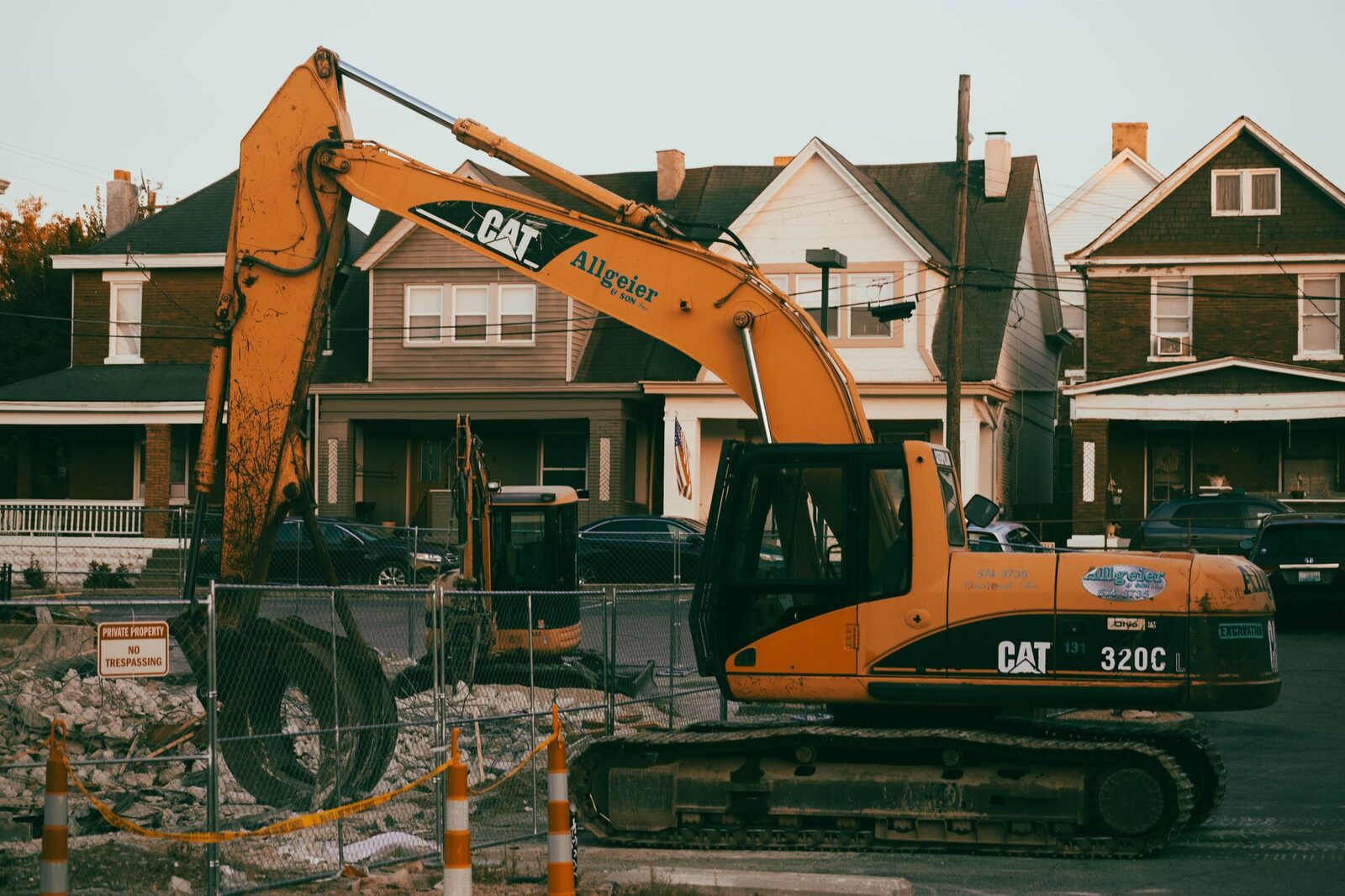
What are the construction noise hours in Adelaide?
Clause 4(a) of Schedule 1 to the Local Nuisance and Litter Control Act 2016 (SA) declares noise to be local nuisance “if an authorised officer forms the opinion” about two things. The first, for construction noise, is that “the noise has travelled from the location of the construction activity to neighbouring premises— on any Sunday or public holiday; or after 7pm or before 7am on any other day”.
The second is “that the level, nature or extent of the noise (including its volume, pitch, vibrational frequency, prevalence or frequency of occurrence) is such as to constitute an unreasonable interference with the enjoyment of the neighbouring premises by persons occupying those premises”.
Clause 4 is one of several routes in section 17. Section 17(1)(a) separately defines local nuisance as an adverse effect on amenity caused by noise that “unreasonably interferes with or is likely to interfere unreasonably with the enjoyment of the area”, and that general definition is not limited to particular hours in the text. Under clause 4, whether the noise is local nuisance turns on the authorised officer’s opinion; how section 17(1)(a) applies to a particular noise is a question for the council or for legal advice.
EPA South Australia’s construction noise page states: “It is recommended that construction site operators to limit noisy activities to between 7 am and 7 pm, Monday to Saturday.”
What counts as construction noise?
The Schedule defines “construction noise” as “noise from any construction activity”. Construction activity “includes” demolition work, site preparation work and building maintenance or repair work; “the operation of vehicles within, or entering or leaving, a construction site”; and “any activities, at or within the immediate vicinity of a construction site, of persons who perform work at the site, or work connected with work at the site”.
The EPA’s Construction noise information sheet (EPA 425/23, updated September 2023) says: “Construction noise restrictions only apply to activities on a site that requires development authorisation under the Planning, Development and Infrastructure Act 2016 (PDI Act) in respect of any of the activities undertaken at the site.” It adds that minor maintenance and other activities not authorised under the PDI Act are regulated under other parts of the Act and the Environment Protection (Commercial and Industrial Noise) Policy 2023.
For comparison, clause 4(a)(i)(B) sets different times for noise, other than fixed machine noise, generated on domestic premises: between “8pm and midnight on any day”, “midnight and 9am on Sunday” or “midnight and 8am on any other day”.
What time can builders start in SA?
The times in clause 4(a)(i)(C) are the reference point: on a day that is not a Sunday or public holiday, the clause covers construction noise “before 7am” and “after 7pm”. Saturday is not singled out in the clause, so a Saturday that is not a public holiday falls under “any other day”; a Saturday that is a public holiday falls under “any Sunday or public holiday”.
The EPA information sheet lists measures for the person responsible for the work, including that “radios which can be heard off site should not be used before 7 am, and be no louder than necessary”, and “commencing any particularly noisy part of the activity after 9 am, such as use of masonry saws or jackhammers”.
It also says: “Where noise may unreasonably impact on neighbours, the responsible person should notify neighbours well before the construction is due to commence and advise neighbours about the start date, duration, type of construction and provide a contact telephone number for any complaints.”
Can building work happen on a Sunday or public holiday?
On those days, clause 4(a)(i)(C) is not limited to particular hours: it applies to construction noise that travels to neighbouring premises “on any Sunday or public holiday”, again subject to the authorised officer’s opinion on unreasonable interference.
Section 19 lets a council exempt a person from the local nuisance offence in section 18 for a specified activity, by notice in writing. The examples given in the Act begin with “construction or demolition works”. An application is made to the council with a site nuisance management plan, unless the council waives it under section 19(2a), and the fee the council has fixed.
For concrete pours that need to start outside those hours, the EPA information sheet says builders should “seek formal approval from the relevant authority”.
Can a council set conditions on construction hours?
Yes, through the tools the Act gives it. A section 19 declaration “may be unconditional or subject to conditions, including (but not limited to) conditions relating to— (a) the permitted times or periods of time for carrying on the activity; or (b) the manner of carrying on the activity.” The council may vary or revoke a declaration, and section 19(7) requires it to publish the declaration, and any variations or extensions, “on a website determined by the council”.
Under section 30, the Minister or a relevant council may issue a nuisance abatement notice. Among other things, it may require a person to “discontinue, or not commence, a specified activity” or “not carry on a specified activity except at specified times or subject to specified conditions”.
Clause 5(d) of Schedule 1 declares that some noise from activities carried on under an authorisation granted under another Act is not local nuisance, but it opens with the words “other than in the case of construction noise or other nuisance from construction activities carried out in accordance with a development authorisation”.
Who do you complain to about construction noise in Adelaide?
Section 7(1) makes a council “the principal authority for dealing with local nuisance and littering in its area”. Under section 12, “All police officers are authorised officers for the purposes of this Act”, and councils may appoint their own officers or employees as authorised officers. Section 20 requires a person, “on request by an authorised officer”, to cease an activity that in the officer’s opinion is causing local nuisance.
The Law Handbook suggests first talking to the neighbour and, if that fails, mediation. It then says: “If neighbours are unable to resolve a noise-related issue between themselves or with the help of a mediator, a complaint may be made to the local council.” It adds that anyone affected may apply to the Environment, Resources and Development Court for orders, but that “an unsuccessful application may result in the applicant having to pay the legal and non-legal costs of the neighbour”.
The EPA says it “is responsible for managing construction noise at sites where an authorisation to conduct an activity of environmental significance applies”, and its information sheet sets out separate procedures for those sites.
Common Questions
What are the construction noise hours in Adelaide?
Under Schedule 1, clause 4(a)(i)(C) of the Local Nuisance and Litter Control Act 2016 (SA), construction noise can be a local nuisance if it travels to neighbouring premises on any Sunday or public holiday, or after 7pm or before 7am on any other day, and an authorised officer considers it an unreasonable interference with the neighbours’ enjoyment. EPA South Australia recommends limiting noisy activities to between 7 am and 7 pm, Monday to Saturday.
What time can builders start work in South Australia?
The Local Nuisance and Litter Control Act 2016 (SA), Schedule 1 clause 4(a)(i)(C), uses 7am as the reference on days other than Sundays and public holidays: construction noise travelling to neighbouring premises before 7am can be a local nuisance if an authorised officer considers it unreasonable. EPA South Australia’s construction noise guidance also suggests starting any particularly noisy work, such as masonry saws or jackhammers, after 9 am. Noise after 7am is not automatically permitted: the general definition in section 17(1)(a) is not limited to particular hours, and conditions of a development authorisation may also apply.
Can builders work on a Saturday in SA?
Under Schedule 1, clause 4(a)(i)(C) of the Local Nuisance and Litter Control Act 2016 (SA), a Saturday that is not a public holiday is “any other day”, so the clause covers construction noise travelling to neighbouring premises before 7am or after 7pm; on a Saturday that is a public holiday it covers the whole day. In either case it is local nuisance only if an authorised officer also considers the noise an unreasonable interference with the neighbours’ enjoyment. EPA South Australia’s recommended window for noisy construction activity is 7 am to 7 pm, Monday to Saturday. Noise within those hours is not automatically permitted: the general definition in section 17(1)(a) is not limited to particular hours, and conditions of a development authorisation may also apply.
Can a council allow construction outside the normal hours in SA?
Section 19 of the Local Nuisance and Litter Control Act 2016 (SA) allows a council, by written notice, to exempt a person from the local nuisance offence for a specified activity, with construction or demolition works given as an example. The council can attach conditions, including on permitted times, and must publish the declaration on a website it determines. An application needs a site nuisance management plan unless the council waives it under section 19(2a).
Who do I complain to about building noise in SA?
The local council is the principal authority for local nuisance under section 7 of the Local Nuisance and Litter Control Act 2016 (SA), and police officers are also authorised officers under section 12. The Law Handbook suggests talking to the neighbour or using mediation first, then complaining to the council. EPA South Australia handles construction noise at sites holding an environmental authorisation.
Sources
- Local Nuisance and Litter Control Act 2016 (SA), version 18.6.2026 — sections 7, 12, 17–20, 30 and Schedule 1Accessed 2026-11-16
- South Australian Legislation — Environment Protection (Noise) Policy 2007 [ceased], revoked 31 October 2023Accessed 2026-11-16
- Law Handbook (Legal Services Commission of SA) — Noise (Last Revised 5 December 2023)Accessed 2026-11-16
- Law Handbook — Local nuisanceAccessed 2026-11-16
- EPA South Australia — Construction noise (last modified 30 April 2024)Accessed 2026-11-16
- EPA South Australia — Construction noise information sheet, EPA 425/23 (updated September 2023)Accessed 2026-11-16
This page describes these sources as they stood on the access dates above. It is not legal advice about any particular property.
Planning a rebuild or new build in Adelaide? Start with a free initial consultation.