
In South Australia, the Planning, Development and Infrastructure Act 2016 (SA) contains two notice procedures for building work that reaches the neighbouring property. Section 139 applies where a development approval envisages that access to other land will be required to address an effect on its stability caused by the development, such as some excavation or fill near a boundary; in that case the Regulations require a prescribed notice to be served “at least 20 business days before the building work is commenced”. Section 140 deals with access from an adjoining allotment for inspections or building work. This note quotes the Act as consolidated at 30 July 2026, the Planning, Development and Infrastructure (General) Regulations 2017 as consolidated at 29 October 2026, and the Law Handbook. It is not legal advice.
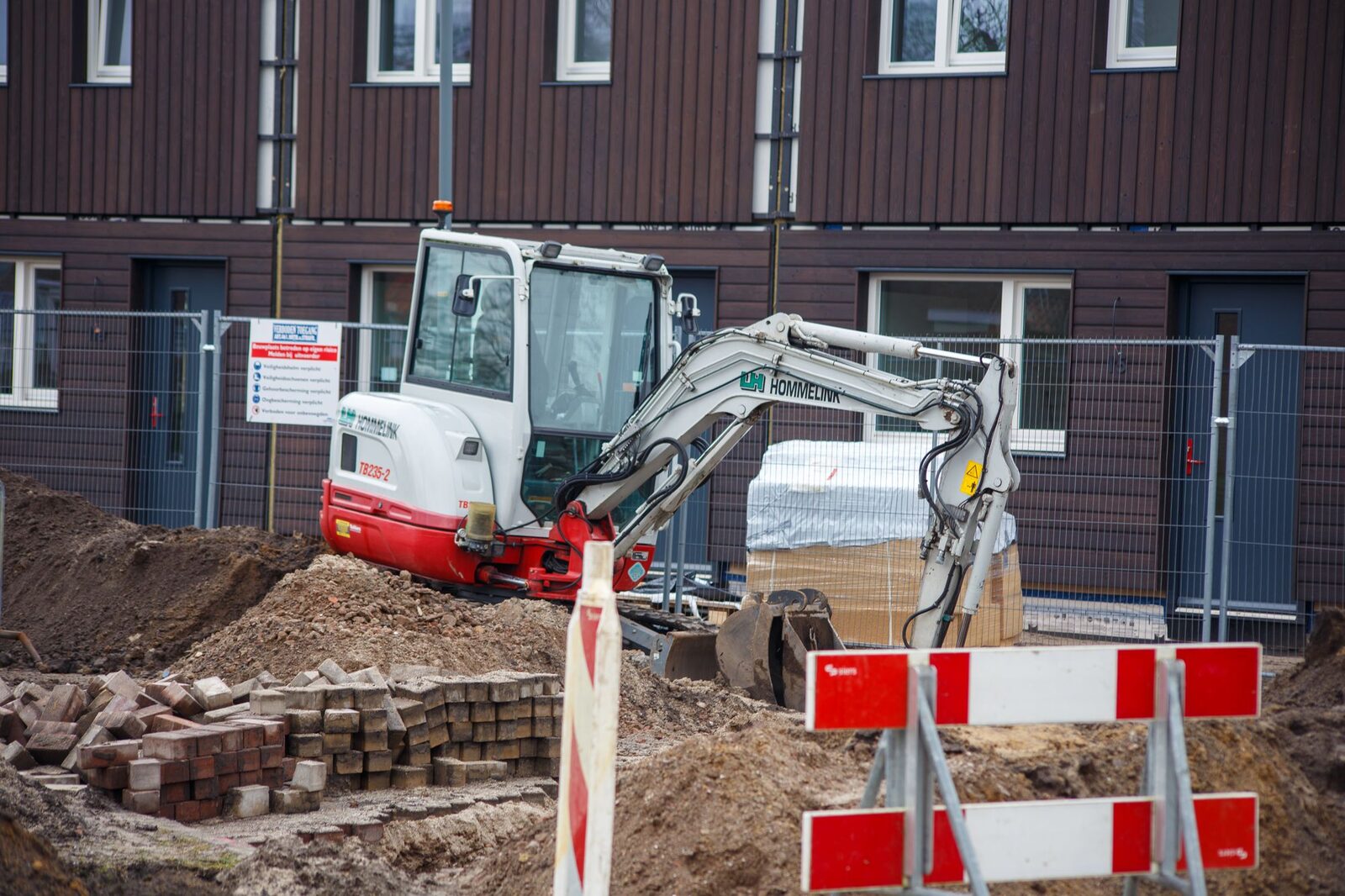
Do you have to tell neighbours before building work in SA?
This note covers the two procedures in Part 10 Division 5 (“Access to land”) of the Planning, Development and Infrastructure Act 2016 (SA). They are triggered by particular circumstances rather than by building work in general, and they are not the only rules that can involve a neighbour. Fencing work has its own notice procedure under the Fences Act 1975 (SA), and work on a party wall has notice requirements in sections 148 and 149 of the PDI Act; both are covered in separate notes.
Separately from the law, EPA South Australia’s construction noise information sheet says: “Where noise may unreasonably impact on neighbours, the responsible person should notify neighbours well before the construction is due to commence and advise neighbours about the start date, duration, type of construction and provide a contact telephone number for any complaints.”
What building work is treated as affecting neighbouring land?
Section 139(1) applies “if a development approval envisages that a person who undertakes the development will require access to other land or premises in order to address an affect on the stability of that land or those premises that will be caused (or is likely to be caused) on account of the undertaking of the development”. The Act calls that land “the affected site”.
Regulation 64(2) of the General Regulations prescribes work that is “to be treated for the purposes of that section as building work that affects the stability of other land or premises”. It lists three kinds:
(a) “an excavation which intersects a notional plane extending downwards at a slope of 1 vertical to 2 horizontal from a point 600 mm below natural ground level at a boundary with an adjoining site”;
(b) “an excavation which intersects any notional plane extending downwards at a slope of 1 vertical to 2 horizontal from a point at natural ground level at any boundary between 2 sites (not being a boundary with the site of the excavation), where the boundary is within a distance equal to twice the depth of the excavation”; and
(c) “any fill which is within 600 mm of an adjoining site, other than where the fill is not greater than 200 mm in depth (or height) and is for landscaping, gardening or other similar purposes.”
Schedule 10 of the Regulations illustrates (a) and (b) with two figures. Regulation 64(1) also sets a design assumption: “It must be assumed in designing, and assessing the design of, a building that it is possible that an excavation which intersects (but does not extend beyond) a notional plane extending downwards from the boundary at the site at a slope of 1 vertical to 2 horizontal from a point 600 mm below natural ground level at the boundary could be undertaken on an adjoining site.”
What notice must be given, and how far ahead?
Where section 139 applies, section 139(2)(a) requires the person undertaking the development to ensure “a notice in the prescribed form is provided to the owner of the affected site in accordance with the regulations”, informing the owner that access to the affected site may be required.
Regulation 64(2a) prescribes the form in Schedule 10A and requires the person undertaking the development to “serve a completed notice on the owner of the affected site at least 20 business days before the building work is commenced.” Section 3(1) of the Act defines a business day as “any day except— (a) Saturday, Sunday or a public holiday; or (b) any other day which falls between 25 December in any year and 1 January in the following year”.
The Schedule 10A form, headed “Initial notice to owner of affected site”, is addressed to the owner and sets out the building work to be performed, including “description of the nature of the building work”, the intended commencement date, the intended completion date, and a notice that access to the affected site may be required in accordance with section 139(2) and (3). It is signed and dated.
Before actually going onto the affected site, section 139(2)(c) requires a further notice of the proposed work, and regulation 64(2b) sets it at “at least 1 business day’s notice of the proposed work and the proposed time of accessing the affected site”.
What can the neighbouring owner require?
Section 139(2)(b) entitles the person undertaking the development to access the affected site “at any reasonable time in order to protect the affected site and to carry out such other work in relation to the affected site as the owner of the affected site may require”.
Regulation 64(3) sets what that owner may require: “the owner of the affected land or premises may require the building owner to shore up any excavation or to underpin, stabilise or otherwise strengthen the foundations of any building to the extent specified by a professional engineer engaged by the owner of the affected land or premises.” Regulation 64(4) provides that “The building owner must pay the reasonable costs of obtaining a report and plans and specifications from a professional engineer” for that purpose. A professional engineer is defined by reference to Engineers Australia membership or registration and experience in civil or geotechnical engineering.
Under section 139(2)(e), a person required to do that work may apply to the Environment, Resources and Development Court “for a determination of what proportion (if any) of the expense incurred by the person in the performance of the work should be borne by the owner of the affected site”. Section 139(4) makes it an offence to fail to give the section 139(2)(c) notice or to fail to comply with a requirement under section 139(2)(d).
The Law Handbook adds that a neighbour who has been served and “believes they need more time to obtain engineering advice” should first discuss it with the person proposing the work and, if more time is not agreed, “may apply to the Environment, Resources and Development Court to stop commencement of work until necessary engineering advice has been obtained.”
Does the council check that notice was given?
The Law Handbook states: “It is not the role of local councils to check or enforce the service of notice in relation to work that may affect the stability of neighbouring land.” It says that where a development application includes a retaining wall, the relevant planning authority “may attach an advisory notice to its approval”, reminding the owner that notice under section 139 may be needed.
On what happens if notice is missed, the Handbook says: “If required notice was not given before work was done, the affected neighbour may apply to the Environment, Resources and Development Court to have further work done to ensure the stability of their land is not affected.”
What if the builder needs access to the neighbour’s land for other work?
Section 140 applies where a person “reasonably requires access” to a building or allotment “from an adjoining allotment” to carry out an inspection for proposed development, “any building work with respect to the relevant place”, or another prescribed activity. The person may serve notice on the owner of the adjoining allotment requesting access.
Section 140(3) requires the notice to be in the prescribed form (Schedule 10B of the Regulations) and to state the reason for access, propose a time or period, and say who would enter, “what they would bring with them” and “what activity or work would be carried out”.
If the owner does not respond within the prescribed period, which regulation 64A(2) sets at 10 business days, or refuses, or proposes alternative arrangements “that are considered to be unreasonable”, the person may apply to the Environment, Resources and Development Court, which “may, if it considers it reasonable to do so, issue an authorisation permitting access”.
A person entering under section 140 must, “insofar as is reasonably practicable, minimise disturbance to the land”, and is “liable to pay reasonable compensation on account of any loss or damage caused”. Section 140(11) says it does not limit access “under an agreement with the owner or occupier of the land”, and section 140(12) says it does not limit the operation of section 139.
Common Questions
Do I have to notify my neighbour before building work in SA?
It depends on the work. Under section 139 of the Planning, Development and Infrastructure Act 2016 (SA), where a development approval envisages access to other land to address an effect on its stability, the owner of that land must be served a prescribed notice. Section 140 is a separate procedure: a person who reasonably requires access from an adjoining allotment may serve a prescribed notice requesting access, and can apply to the Environment, Resources and Development Court if refused or not answered within 10 business days. Dividing fences and party walls have their own notice rules.
How much notice is needed for excavation near a boundary in SA?
Where section 139 of the Planning, Development and Infrastructure Act 2016 (SA) applies, regulation 64(2a) of the Planning, Development and Infrastructure (General) Regulations 2017 requires the Schedule 10A notice to be served on the owner of the affected site at least 20 business days before the building work is commenced. Regulation 64(2b) requires at least 1 business day’s further notice before accessing that site.
Which excavation or fill counts as affecting neighbouring land in SA?
Regulation 64(2) of the Planning, Development and Infrastructure (General) Regulations 2017 (SA) lists three kinds: (a) an excavation that intersects a notional plane sloping down at 1 vertical to 2 horizontal from a point 600 mm below natural ground level at a boundary with an adjoining site; (b) an excavation that intersects any such 1 vertical to 2 horizontal plane drawn from natural ground level at a boundary between two other sites, where that boundary is within a distance equal to twice the depth of the excavation; and (c) fill within 600 mm of an adjoining site, except fill no more than 200 mm deep (or high) for landscaping, gardening or similar purposes.
Can a neighbour require underpinning when building work affects their land in SA?
Regulation 64(3) of the Planning, Development and Infrastructure (General) Regulations 2017 (SA) allows the owner of the affected land to require the building owner to shore up an excavation or to underpin, stabilise or strengthen foundations, to the extent specified by a professional engineer the affected owner engages. Regulation 64(4) requires the building owner to pay the reasonable costs of that engineer’s report, plans and specifications. Under section 139(2)(e) of the Act, a person required to do the work may apply to the Environment, Resources and Development Court to determine what proportion, if any, of the expense the affected owner should bear.
Does the council enforce the neighbour notice for building work in SA?
The Law Handbook of South Australia says it is not the role of local councils to check or enforce service of the section 139 notice under the Planning, Development and Infrastructure Act 2016 (SA). It says the affected neighbour may apply to the Environment, Resources and Development Court, and section 139(4) makes certain failures an offence.
Sources
- Planning, Development and Infrastructure Act 2016 (SA), version 30.7.2026 — sections 139 and 140Accessed 2026-11-16
- Planning, Development and Infrastructure (General) Regulations 2017 (SA), version 29.10.2026 — regulations 64 and 64A; Schedules 10, 10A and 10BAccessed 2026-11-16
- Law Handbook (Legal Services Commission of SA) — Retaining Walls (Last Revised 17 November 2023)Accessed 2026-11-16
- EPA South Australia — Construction noise information sheet, EPA 425/23 (updated September 2023)Accessed 2026-11-16
This page describes these sources as they stood on the access dates above. It is not legal advice about any particular property.
Planning a rebuild or new build in Adelaide? Start with a free initial consultation.