
Living at home during renovation or an extension is a decision about a particular house and a particular sequence of work, not a yes-or-no question about extensions in general. It turns on which rooms and services the work takes out of use, whether the occupied part can be kept separate from the work area, and when the existing house is opened up. The questions below are the ones worth answering, in writing, before the household decides where to stay.
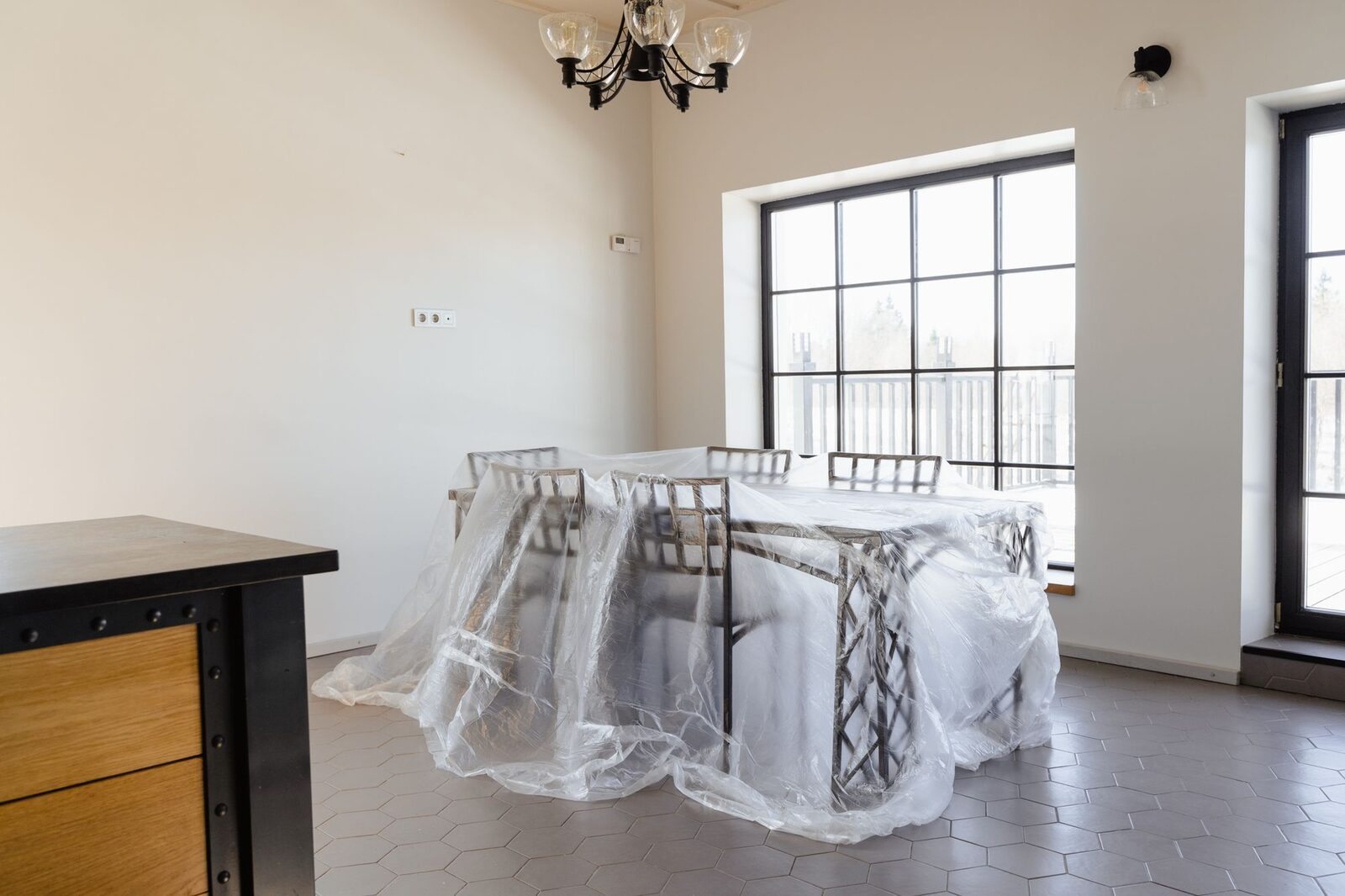
Can you live in your house during an extension?
There is no general answer. The Australian Government’s YourHome guide to renovations and additions lists what a building contract should cover, and three items bear directly on it: “working hours, dust, noise and access to facilities”, “site separation and safety issues”, and “if and when the home needs to be vacated”.
That last item is the useful framing. A rear extension that joins the house only at the end of the job raises different questions from one that opens the kitchen wall early, takes the roof off or moves the bathroom. The work sequence decides when, and for how long, each part of the house is affected, so the occupancy decision is made while the sequence is planned rather than after it.
Kitchen or bathroom out of action during renovation
Start with a list of the rooms the household cannot do without, and mark against each one the stage of work that takes it out of use. A kitchen being rebuilt, or a bathroom being moved, is the point at which a household may need temporary arrangements or other accommodation.
YourHome suggests asking a builder: “What facilities will you require on the project (e.g. toilet and kitchen access, materials storage in garage or garden area)?” The answer shows which parts of the house and garden the work will occupy.
Services disconnected during renovation
Power, water, sewer and gas can run through the parts of the house being altered. The South Australian Government advises “always use licensed tradespeople for building, electrical, gas and plumbing work.” Some services may need to be isolated while connections to the new work are made.
The household questions are practical: which circuits, taps, hot water and heating will be off at each stage, and whether the house remains usable while they are. Those answers come from the work sequence for that house and are worth having before deciding to stay.
Site safety around children and pets
SafeWork SA’s guidance on construction site security states that a person conducting a business or undertaking at a workplace where construction work is carried out must ensure, so far as is reasonably practicable, that the site is secured from unauthorised access. It names the proximity of places frequented by children among the factors to weigh, and the risk assessment it describes cuts both ways: for residential work in a suburban street “where the likelihood of access is minimal and risks are low (eg a single storey dwelling with no excavations), a secure access system may not be needed.” Where security is needed, it states: “Bunting or plastic strips do not prevent access, and are therefore unacceptable. A security system needs to be a rigid structure, such as a fence.”
That guidance is about unauthorised access by the public. It does not address a household living on the property.
Where a family lives beside the work area, how that separation is achieved, where the boundary between the occupied house and the site runs, and how children and pets are kept out of it are questions for the site arrangements of that job. The same applies to the path from the street to the front door if deliveries and machinery share it.
Dust, noise and asbestos in older homes
YourHome suggests asking: “How might you separate the site (and dust, noise, vibration) from the living areas?” Cutting into existing walls, floors and ceilings produces dust inside the house, and the answer describes how the occupied rooms are closed off from it.
In older houses there is also asbestos to consider. SafeWork SA’s guide for home renovators states that a home built or renovated before the mid-1980s is “highly likely” to have asbestos-containing products. The South Australian Government’s asbestos website states that “the removal of asbestos during major building renovation or demolition must be carried out by licensed asbestos removalists”, and that licensed removalists advise neighbours of removal times by letterbox notification. The same website’s homeowners page states that “there is no legal requirement for individual homeowners to have a licence to remove asbestos-containing material from their own property”, that “builders and tradies are not permitted to remove more than 10m2 of non-friable material without an asbestos removal licence”, and that a home in which a contractor is engaged becomes a workplace while the work is done, to which the Work Health and Safety Act 2012 (SA) and the Work Health and Safety Regulations 2012 (SA) apply.
These pages describe different situations and are not a single permission rule; the removal requirements for the proposed work are checked with SafeWork SA before asbestos is disturbed. Whether the household is in the house during any removal is part of the occupancy decision.
Occupying part of a house while building work continues
Section 152(1) of the Planning, Development and Infrastructure Act 2016 provides that a person must not “occupy a building on which building work is carried out after the commencement of this section unless an appropriate certificate of occupancy has been issued for the building, or the building is of a type excluded by the regulations from the requirements as to certificates of occupancy”. Under section 152(12) a certificate may apply to the whole or part of a building. Section 153(1) allows a person, with the approval of a council, to occupy a building on a temporary basis without a certificate of occupancy; section 153(2) limits when that approval may be given and allows the council to impose conditions.
Regulation 103H of the Planning, Development and Infrastructure (General) Regulations 2017 applies to a Class 1a building for which a certificate of occupancy is not required. Subregulation (2) provides that a person must not occupy “a Class 1a building under the Building Code (or an addition to a Class 1a building) that has not been fully completed in accordance with a development authorisation insofar as it relates to the performance of building work” unless the conditions in paragraphs (a) to (e) are met, among them that the building is structurally sound and weatherproof and that all smoke alarms required under the Building Code have been installed and tested.
Which of these provisions apply to a house that is lived in while part of it is altered is confirmed with the council for that address, or with a building certifier acting under section 154 of the Act.
Living at home during renovation: questions to settle first
Which rooms and services are out of use at each stage? Where does the boundary between the occupied house and the site run? When is the existing house opened to the weather? Has the house been checked for asbestos where the work will reach? YourHome’s list of contract contents also includes “if there’s damage to existing property, who pays”, which matters more when belongings stay in the house.
Common Questions
Can a household stay in the house if the extension is only at the back?
Where the extension sits does not settle it on its own. Occupation during building work is governed by sections 152 and 153 of the Planning, Development and Infrastructure Act 2016 and, where relevant, regulation 103H of the General Regulations, and which of them apply is confirmed with the council or building certifier for the address. Separately, YourHome recommends the building contract records site separation and safety, and “if and when the home needs to be vacated”.
What if the kitchen is out of action but the bathroom still works?
Then the question is how long the kitchen is unavailable at that stage of the work and what temporary arrangement the household can manage. The work sequence for that house shows when each room goes out of use, and is the document to plan around.
What does SafeWork SA say about securing a renovation site near children?
SafeWork SA’s site security guidance states that a person conducting a business or undertaking where construction work is carried out must ensure, so far as is reasonably practicable, that the site is secured from unauthorised access, weighing the risks, the likelihood of access (including proximity to places frequented by children) and how hazards can be isolated. It states that where security is needed, bunting or plastic strips are unacceptable and a rigid structure such as a fence is required. How the work area is separated from an occupied house is a matter for the site arrangements of that job.
What do SA government sources say about asbestos removal during a home renovation?
SafeWork SA’s guide for home renovators states that home renovators “do not need a licence to remove asbestos-containing material by law”, that friable asbestos must be removed by a licensed asbestos removalist, and that a licensed removalist is recommended for large quantities of non-friable asbestos. The South Australian Government’s asbestos website states that builders and tradies are not permitted to remove more than 10m2 of non-friable material without an asbestos removal licence. These statements describe different situations; the removal requirements for proposed work are checked with SafeWork SA before asbestos is disturbed.
At what stage might a household need other accommodation during an extension?
At the stages when rooms the household relies on, or essential services, are out of use, or when the occupied part cannot be kept separate from the work. Those stages come from the work sequence for that house, and YourHome recommends the contract records if and when the home needs to be vacated.
Sources
- YourHome (Australian Government) — Renovations and additionsAccessed 2026-10-19
- YourHome (Australian Government) — Building a houseAccessed 2026-10-19
- SafeWork SA — Site security (Wayback Machine snapshot of 9 October 2026)Accessed 2026-10-19
- SafeWork SA — A DIY guide to asbestos safety for home renovators (Wayback Machine snapshot of 25 November 2025)Accessed 2026-10-19
- asbestos.sa.gov.au — In your neighbourhood (Wayback Machine snapshot of 20 April 2026)Accessed 2026-10-19
- asbestos.sa.gov.au — Homeowners (Wayback Machine snapshot of 19 April 2026)Accessed 2026-10-19
- Planning, Development and Infrastructure Act 2016 (SA), authorised version 30.7.2026 — sections 152, 153 and 154 (Wayback Machine snapshot of 30 July 2026)Accessed 2026-10-19
- Planning, Development and Infrastructure (General) Regulations 2017 (SA), authorised version 4.12.2025 — regulation 103H (Wayback Machine snapshot of 26 March 2026)Accessed 2026-10-19
- SA.GOV.AU — Planning a new home or renovation (Wayback Machine snapshot of 25 November 2025)Accessed 2026-10-19
This page describes legislation as it stood on the access dates above. It is not legal advice about any particular property.
Planning a rebuild or new build in Adelaide? Start with a free initial consultation.