In South Australia, the SA.GOV.AU page on safety switches, provided by the Department for Energy and Mining, states: “By law, safety switches for power points and lighting circuits must be installed in new homes and buildings where electrical circuits are added or altered.” The Electricity (General) Regulations 2012 require electrical installations to comply with AS/NZS 3000, the Wiring Rules, and the licensed electrician certifies the work on an electronic certificate of compliance. This note quotes the SA government pages and the Regulations; it does not reproduce AS/NZS 3000.
What is a safety switch?
The SA.GOV.AU page describes it this way: “A safety switch quickly turns off the electricity supply if an electrical fault is detected. They are considered a back-up and don’t prevent all electric shocks.” Safety switches are also called residual current devices, or RCDs; the Office of the Technical Regulator’s schedule of test results for electricians has a column headed “RCD test results”.
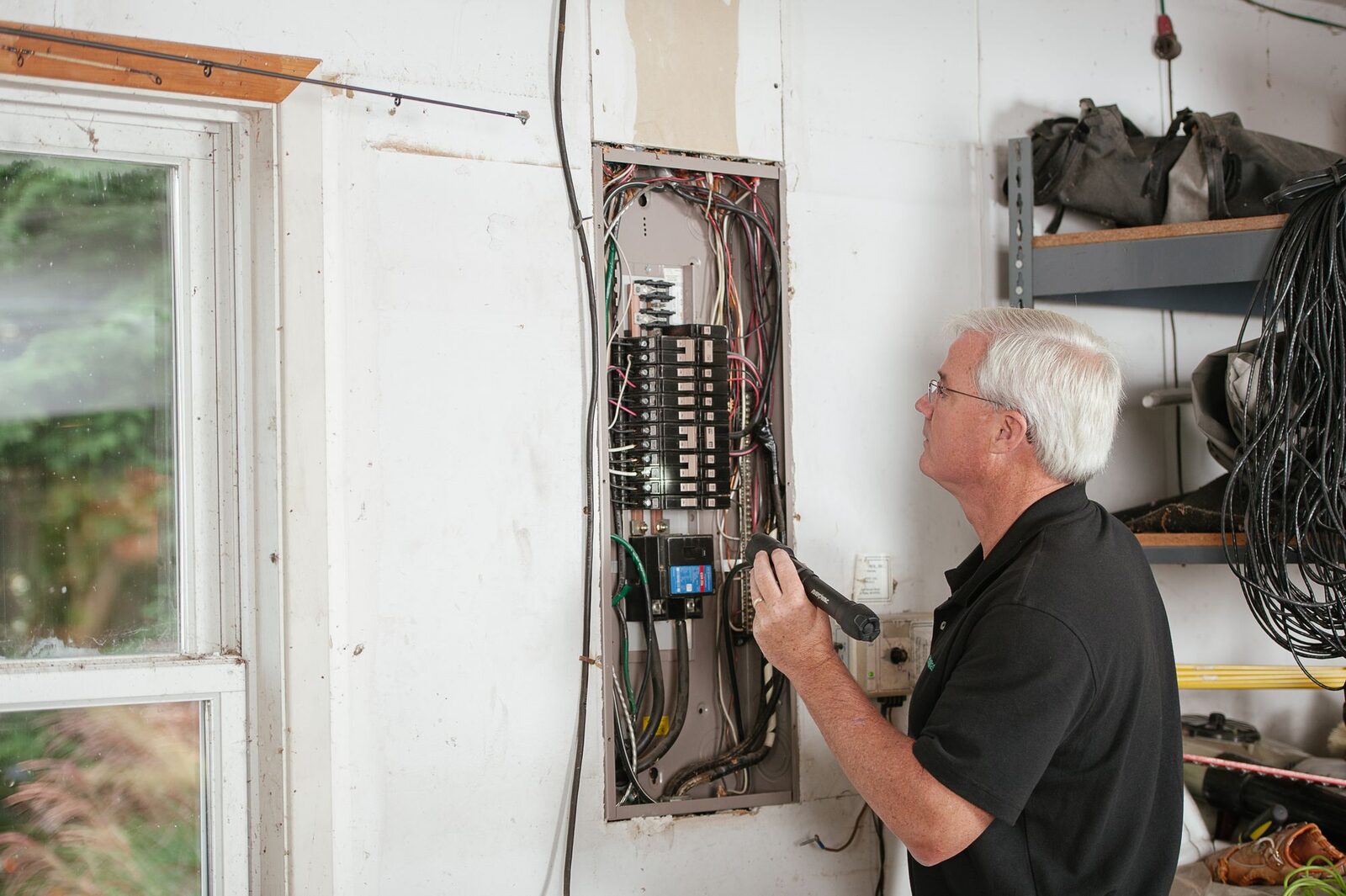
The page lists three types. Switchboard safety switches are “Installed on individual circuits” and can protect “selected electrical circuits” and “appliances and extension cords connected to power points”; if a fault occurs, “the switch turns off the electricity supply to that circuit. Appliances and lighting connected to other circuits will keep working.” Power point safety switches protect what is plugged into them and “can protect other electrical wiring and power points on the same circuit”, and the page says one “should be installed at the first power point after the switchboard.” Portable safety switches “will only protect from faults with the equipment directly plugged into them.”
Safety switch vs circuit breaker: what is the difference?
The SA pages read for this note do not define a circuit breaker. Queensland’s Electrical Safety Office, another state’s regulator, explains the difference on its safety switches page: “Safety switches protect you from electric shock. They turn off the electricity within milliseconds when a current leak is detected.” It continues: “Circuit breakers and fuses on the other hand protect the circuitry. They cut the power when electrical wiring has too much current flowing through it.”
The same page says: “Circuit breakers and fuses do not protect people directly, only safety switches save lives.” On telling them apart at the switchboard, it says to look for “any switches with a ‘T’ or ‘test’ button”, and that safety switches “can be part of a circuit breaker”. The OTR schedule of test results likewise lists a combined “MCB/RCD combo” as a device type.
What are the safety switch requirements for a new SA house?
The SA.GOV.AU statement is the plainest summary: by law, safety switches “for power points and lighting circuits must be installed in new homes and buildings where electrical circuits are added or altered.”
The SA.GOV.AU page does not name the law it refers to. The Electricity (General) Regulations 2012 call up AS/NZS 3000: regulation 53(1) states: “Electrical installations must comply with AS/NZS 3000 and any other Australian Standard or Australian/New Zealand Standard called up by AS/NZS 3000.” Regulation 55(1) adds that an installation must be designed, installed, operated and maintained to comply with AS/NZS 3000 “in all cases” and, if it is connected to a distribution network, with “the technical installation rules of the operator of the network.” The current version read, dated 14 March 2024, contains no separate clause on residual current devices; the detail sits in AS/NZS 3000, which the Office of the Technical Regulator says can be purchased from Intertek Inform.
The SA.GOV.AU page also says switchboard and power point safety switches “must be installed by a licensed electrician”.
How many safety switches does a house need?
None of the South Australian sources read for this note gives a number. The SA.GOV.AU page names the circuits that must be protected in a new home, power points and lighting. Regulation 53(1) of the Electricity (General) Regulations 2012 requires electrical installations to comply with AS/NZS 3000; the public sources reviewed here do not specify a device count or switchboard arrangement for an individual house. The licensed electrician carries out, tests and certifies the work on the eCoC.
Queensland’s Electrical Safety Office puts its consumer message this way: “The risk is real. One safety switch may not be enough.” Its films describe a switchboard where one safety switch protects the lighting circuit and another the power point circuits, and suggest extra safety switches for circuits such as “the air-conditioner circuit, hot water system, oven and pool equipment.” That is Queensland guidance, not a South Australian rule. To identify safety switches, the Queensland page says to look for “marked labels and any switches with a ‘T’ or ‘test’ button”, and adds: “If you’re still not sure, check with your electrician about which circuits are protected by a safety switch, or use the safety switch test button to see which circuits are switched off by the test.”
How and when should a safety switch be tested?
Electricians test the installation before it is certified. The OTR says anyone performing electrical work is required by section 61(1)(b) of the Electricity Act 1996 “to examine and test their work”, and that regulation 56(1)(a) requires the work to be examined and tested in accordance with AS/NZS 3000. The OTR recommends that electrical workers be familiar with “the verification requirements of Section 8 of AS/NZS 3000 (Wiring Rules)”. Its schedule of test results records RCD tests, and includes the option: “I will return to site to energise and test RCD after supply is available.”
For owners, SA.GOV.AU says: “You should test your safety switches twice a year”, and suggests doing it when the clocks change for daylight saving. “Press the ‘test’ or ‘T’ button to trigger a test. The switch should immediately trip to the ‘off’ position. If it doesn’t, turn off the power at once and call a licensed electrician.” Queensland’s Electrical Safety Office recommends testing every three months; the two regulators give different intervals.
If a safety switch has tripped, SA.GOV.AU lists possible causes as “a temporary fault”, “lightning” or “nuisance tripping”, and says that if it cannot be reset, “you could have a faulty appliance connected to the circuit, or faulty wiring.”
What paperwork comes with the electrical work?
SA.GOV.AU says that for a switchboard or power point safety switch: “Make sure you are given a certificate of compliance within thirty days of the switch being installed.” SA.GOV.AU’s certificates of compliance page says electricians must give an eCoC “for most of their work”, and that certificates are not required for minor maintenance such as replacing lightbulbs. The OTR’s electrical trades page says electricians “must issue an eCoC to customers after completing any electrical work” and gives one purpose of the eCoC as to “assure the customer that the work is installed, examined and tested to the required Australian Standards”.
Regulation 55A(1) of the Electricity (General) Regulations 2012 says an electronic certificate of compliance may only be relied on if it certifies that the installation complies with AS/NZS 3000 and has been examined and tested as regulation 56 requires, records “the results of that examination and testing”, and is issued by a registered electrical worker. Regulation 55A(2), subject to 55A(3) and (4), requires the registered electrical worker, “before the electrical installation is made available for energisation”, to complete the certificate “to the extent required by the Technical Regulator under regulation 57”. Where that worker is an employee, they issue it to the contractor or the contractor’s authorised agent, who completes it. The completed certificate goes to the Technical Regulator and “the owner or operator of the installation” “within 30 days after the electrical installation was made available for energisation”. The separate note on certificates of compliance covers copies and what to do if one is not provided.
What about existing homes and renovations?
The SA.GOV.AU requirement applies to new homes and buildings “where electrical circuits are added or altered”, so it is tied to electrical work being done. The SA.GOV.AU and OTR pages read for this note do not set a requirement to fit safety switches when a home is sold.
For a renovation or extension that adds or alters circuits, regulation 53(1) requires the installation to comply with AS/NZS 3000; the licensed electrician carries out, tests and certifies the work on the eCoC.
Common Questions
Are safety switches required in a new house in South Australia?
The SA.GOV.AU safety switches page, provided by the Department for Energy and Mining (last updated 14 August 2023), states: “By law, safety switches for power points and lighting circuits must be installed in new homes and buildings where electrical circuits are added or altered.” The Electricity (General) Regulations 2012 require electrical installations to comply with AS/NZS 3000, the Wiring Rules.
What is the difference between a safety switch and a circuit breaker?
Queensland’s Electrical Safety Office explains that safety switches “turn off the electricity within milliseconds when a current leak is detected” to protect people from electric shock, while “Circuit breakers and fuses on the other hand protect the circuitry”, cutting power when wiring carries too much current. The same Queensland page says to look for a ‘T’ or ‘test’ button, and that safety switches “can be part of a circuit breaker”.
How many safety switches does a house need in SA?
The South Australian government pages and the Electricity (General) Regulations 2012 read for this note do not state a number. SA.GOV.AU says power point and lighting circuits in new homes must be protected, and regulation 53 requires electrical installations to comply with AS/NZS 3000; the public sources reviewed here do not specify a device count or switchboard arrangement for an individual house. The licensed electrician carries out, tests and certifies the work on the electronic certificate of compliance.
How often should a safety switch be tested?
The SA.GOV.AU safety switches page says owners should test safety switches twice a year, for example when the clocks change for daylight saving, by pressing the ‘test’ or ‘T’ button; the switch should trip to off immediately, and if it does not, the page says to turn off the power and call a licensed electrician. Queensland’s Electrical Safety Office recommends every three months.
Do I get a certificate for a new safety switch in SA?
SA.GOV.AU says that when a switchboard or power point safety switch is installed by a licensed electrician, the owner should be given a certificate of compliance within thirty days, and that electricians must give an eCoC “for most of their work”. Regulation 55A(2) of the Electricity (General) Regulations 2012 requires the registered electrical worker to complete it, to the extent required by the Technical Regulator, before the installation is made available for energisation (an employee issues it to the contractor, who completes it), and requires the certificate to be provided to the Technical Regulator and the owner or operator within 30 days after energisation, subject to regulation 55A(3) and (4).
Sources
- SA.GOV.AU — Safety switches, Department for Energy and Mining (page last updated 14 August 2023)Accessed 2026-11-16
- Electricity (General) Regulations 2012 (SA), version 14.3.2024 — regulations 53, 55, 55A and 56Accessed 2026-11-16
- Office of the Technical Regulator — Electrical trades (eCoC; testing and verification; acts, regulations and standards)Accessed 2026-11-16
- Office of the Technical Regulator — Electrical schedule of test results (form)Accessed 2026-11-16
- SA.GOV.AU — Certificates of compliance, Department for Energy and Mining (page last updated 23 June 2023)Accessed 2026-11-16
- Queensland Electrical Safety Office — Safety switchesAccessed 2026-11-16
This page describes these sources as they stood on the access dates above. It is not legal advice about any particular property.
Planning a rebuild or new build in Adelaide? Start with a free initial consultation.