
Connecting a new South Australian house to power involves three parties: SA Power Networks, which runs the distribution network and makes the connection; an electricity retailer, which holds the account and arranges the meter; and a licensed electrician, who builds the installation and certifies it. SA Power Networks’ new connections page says that, “Due to the technical nature of the information we need, we recommend you have an electrician or electrical consultant complete the application on your behalf.” This note covers a single house with a connection of less than 100 amps, the temporary supply used during construction, and the permanent disconnection of an old house before a knockdown rebuild. It quotes SA Power Networks and the Office of the Technical Regulator; it does not cover fees, subdivisions or network upgrades.
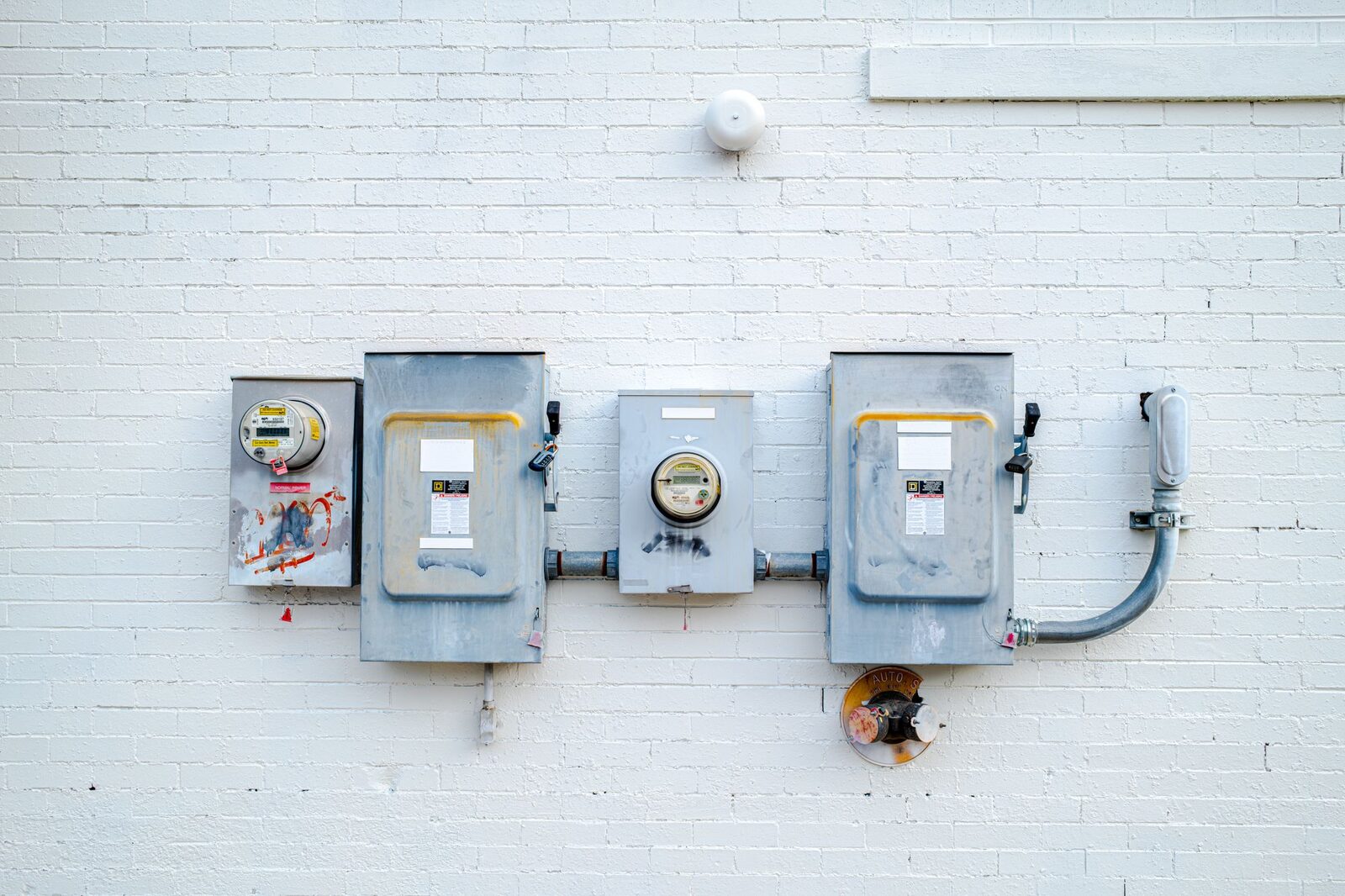
Who does what in a new power connection in SA?
SA Power Networks’ page for residential new connections of less than 100 amps says: “We no longer install meters due to the Australian Energy Market Commission’s (AEMC) Power of Choice initiative. You will need to contact your retailer to organise a meter installation.”
Its Service and Installation Rules (Manual 32, May 2025 revision) set out the split. Clause 5.2.7.1 states that responsibility for revenue metering “now resides with Retailers to engage a Metering Coordinator who then engages the Metering Provider”, and clause 5.2.7.3 states: “Metering equipment shall be supplied, installed, and maintained by the Metering Provider.” The same clause says the customer “shall provide metering facilities to accommodate the metering equipment in accordance with section 8 and clause 10.4.11.”
Among the general rules on its Service and Installation Rules page, SA Power Networks states that electricians, meter providers and customers “are not to connect any wires of electrical equipment to our network at the connection point for new connections and connection alterations. We must make the final connection.”
SA Power Networks’ infographic on basic connections starts with the retailer: “Contact your retailer first” and “Establish an account with your retailer to ensure your application can proceed”.
What is a builder’s temporary supply and how is it set up?
SA Power Networks’ temporary connections page states: “A temporary connection can be set up when there is no permanent power supply on site, for example a building site. You can set up a temporary supply account with your retailer, and then choose one of the options below.” The first option listed is “Install a temporary supply in an area with existing residential underground power”; requests are made through the SA Power Networks Portal.
Clause 7.1.5 of the Service and Installation Rules, “Connection point for short-term supplies”, states that SA Power Networks “may provide a connection point for an installation for a short-term, e.g., temporary building supply and event type situations. The type of connection point will be determined by the load requested by the customer and the limitations of the distribution network.”
The same clause covers temporary poles: “For applications ≤80A in an overhead serviced area, this supply may be provided to a temporary private pole and switchboard location.” It continues: “All reticulation beyond the connection point, including temporary switchboard arrangements and consumer mains, will be the customer’s responsibility.”
Clause 7.1.5 also states: “Where a short-term connection is provided, it shall be disconnected at the time of connection of the permanent supply or conclusion of the event. In some situations, short term supplies, suppling [sic] building site amenities can remain in place for an additional period by negotiation with SA Power Networks Customer Solutions Manager.”
How do you apply to SA Power Networks for a new connection?
For a new residential connection, SA Power Networks lists the process as: “Raise a ‘New service provision request’ via the Portal”; “We will make a technical assessment, where we may contact you for further information or inspect your property”; and “We will invite your electrician to book an appointment with us and we will connect your property.”
The page lists what an application needs: the full address of the property, the billing address, contact details, site photos, the electrician’s details, “a list of fixed appliances, loads and generators (if any)” and “a list of off-peak appliances and loads (if any)”. It adds that applicants “will also need to provide us information on any risks, hazards or other actual or potential concerns that could impact our work in getting you connected.”
SA Power Networks states that in an application “we will automatically assume you want an expedited connection”, which means accepting its Model Standing Offer terms for basic connection services without the formal offer and acceptance process, and that “You can choose not to have an expedited connection”. Clause 5.14 of the SA Power Networks Service and Installation Rules describes the typical Basic Connection Service as a single-phase 63 A supply, states that services above 63 A shall be multi-phase subject to network constraints, and lists 80 A and 100 A supplies as other Basic Connection Service types subject to network constraints.
Two statements bear on the house design. Clause 5.15 states that “the location of the connection point will depend on technical requirements and the customer should not assume a location is acceptable until this has been confirmed by SA Power Networks.” Clause 5.2.6 recommends “that detailed design, procurement, and service contracts occur after acceptance of our Connection Offer to ensure the full technical requirements can be met.”
Where can the meter box go on a new house?
Section 8 of the Service and Installation Rules deals with main switchboards and metering. For a single domestic installation, clause 8.1.3 states: “A minimum horizontal clearance of not less than 600mm shall be provided in front of the MSB”, and “A minimum vertical clearance of 2m from ground level shall be maintained in this clearance zone.” Clause 8.3.1 refers to figures showing suitable switchboard locations for a single domestic installation.
On underground supplies, the Service and Installation Rules page answers: “The service pit or pillar needs to have a minimum of 1.2m clearance in radius. This is to make sure our crews have safe access to it.”
SA Power Networks’ page on building around its infrastructure points owners to “Look Up and Live to identify overhead powerlines” and “Before You Dig Australia to locate underground electrical assets”, and notes that “Building clearances need to account for the powerline’s potential movement, not just its position on the day it is observed.”
Why is a certificate of compliance needed before power is connected?
Clause 5.2.2 of the Service and Installation Rules states: “For SA Power Networks to make a connection, verification of compliance of the installation to the Electricity Act 1996 is required through a valid Certificate of Compliance (eCoC).” Clause 5.2.2 of the SA Power Networks Service and Installation Rules (Manual 32, May 2025 revision) requires a valid eCoC and an on-site copy, but permits an Authority to Connect form where providing a printed certificate on site is not reasonably practicable; that form must contain a valid eCoC number and describe all completed work, including examination and testing results. The clause adds that if “the certification is incomplete, or invalid or the installation is considered unsafe, then it will not be connected to the distribution network”.
The Office of the Technical Regulator states that electricians must issue an eCoC to customers after completing any electrical work, that these “are legal documents, required by law under the Electricity Act 1996”, and that “Only people with an appropriate and registered licence can legally fill out an eCoC and certify work.” How the eCoC system works is covered in a separate note.
SA Power Networks lists reasons a connection job may not be completed on the day, including “Installation not compliant”, which “could include situations where there is no Electrical Certificate of Compliance (eCOC) on site, or the meter board has been installed in a non-compliant location”, and “Job not ready”, where “key components such as the meter board or consumer mains are not yet installed or available on site.”
What happens on connection day and when does the house have power?
SA Power Networks explains: “Energisation is when we connect power from the distribution network to your meter isolator. Your electrician will then be able to make the connection to your meter and your property will have power.” On the meter, it says: “You or your electrician will need to organise a meter through your retailer.”
Clause 7.2.1 of the Service and Installation Rules states that, “As per the Electricity Act 1996, SA Power Networks is required to apply a ‘testing and inspection procedure’ before connecting or reconnecting an installation”, and that “The installation shall be ready for the Responsible Officer to commence the connection on arrival.” Appendix B of the Rules is a prompt sheet covering items such as the eCoC on site, access and clearances, consumer mains, the main switchboard and labelling.
The Service and Installation Rules page also states: “If your installation does not comply or satisfy the requirements in these rules, we may delay, withhold or disconnect your supply until it meets these requirements.”
What about the old house’s power before a knockdown rebuild?
SA Power Networks describes a permanent disconnection, “known in the industry as an abolishment”, as “the removal of power supply and National Meter Identifier (NMI) from a property”, and says it “is most commonly needed when demolishing a property”. It states: “An abolishment is raised with your electricity retailer, who will then submit the request to SA Power Networks.”
The same page notes: “We can only remove electricity wires. If there are telecommunications connections, these will need to be removed by the relevant provider.” It adds: “If your property has solar panels or batteries, these must be decommissioned by a licensed electrician before any demolition work begins.”
Clause 5.15.6 of the Service and Installation Rules states that “The customer is responsible for the removal of all portions of consumer mains and associated fixings from SA Power Networks infrastructure”, and clause 5.15.5 states that a site reconnected after it “had been previously abolished” “shall be managed as a new installation.” Who arranges each of these steps on a particular build is set by the building contract and confirmed with the retailer and SA Power Networks.
Common Questions
Who applies to SA Power Networks for a new house connection?
SA Power Networks’ page on residential new connections of less than 100 amps says applications are raised as a “New service provision request” through its Portal, and that “Due to the technical nature of the information we need, we recommend you have an electrician or electrical consultant complete the application on your behalf.” The page also says that SA Power Networks no longer installs meters and that ‘You or your electrician will need to organise a meter through your retailer.’
How do you get a builder’s temporary power supply in SA?
SA Power Networks’ temporary connections page says a temporary connection can be set up “when there is no permanent power supply on site, for example a building site”, that a temporary supply account is set up with a retailer, and that requests are made through the SA Power Networks Portal. Clause 7.1.5 of its Service and Installation Rules (Manual 32, May 2025 revision) states that “All reticulation beyond the connection point, including temporary switchboard arrangements and consumer mains, will be the customer’s responsibility”. Clause 7.1.5 of the SA Power Networks Service and Installation Rules (Manual 32, May 2025 revision) states that a short-term connection is disconnected when the permanent supply is connected or the event concludes, but notes that, in some situations, supplies serving building-site amenities can remain for an additional period by negotiation with its Customer Solutions Manager.
Can a temporary power pole be used on an SA building site?
Clause 7.1.5 of the SA Power Networks Service and Installation Rules (Manual 32, May 2025 revision) states: “For applications ≤80A in an overhead serviced area, this supply may be provided to a temporary private pole and switchboard location.” The type of connection point for a short-term supply “will be determined by the load requested by the customer and the limitations of the distribution network”, so the arrangement for a particular site is confirmed with SA Power Networks.
Does SA Power Networks need a certificate of compliance before connecting a new house?
Clause 5.2.2 of the SA Power Networks Service and Installation Rules (Manual 32, May 2025 revision) states that, for SA Power Networks to make a connection, “verification of compliance of the installation to the Electricity Act 1996 is required through a valid Certificate of Compliance (eCoC)”, and that an installation with incomplete or invalid certification, or one considered unsafe, “will not be connected to the distribution network”. Clause 5.2.2 of the SA Power Networks Service and Installation Rules (Manual 32, May 2025 revision) requires a valid eCoC and an on-site copy, but permits an Authority to Connect form where providing a printed certificate on site is not reasonably practicable; that form must contain a valid eCoC number and describe all completed work, including examination and testing results. The Office of the Technical Regulator states that only people with an appropriate and registered licence can fill out an eCoC.
Who removes the power to an old house before demolition in SA?
SA Power Networks calls the permanent removal of supply and the National Meter Identifier an “abolishment”, says it is “most commonly needed when demolishing a property”, and states that it “is raised with your electricity retailer, who will then submit the request to SA Power Networks.” SA Power Networks removes only electricity wires; telecommunications connections are removed by the relevant provider, and solar panels or batteries “must be decommissioned by a licensed electrician before any demolition work begins.”
Sources
- SA Power Networks — Residential or small business new connections less than 100 ampsAccessed 2026-11-23
- SA Power Networks — Basic connection and timeframes explained (infographic, PDF)Accessed 2026-11-23
- SA Power Networks — Temporary connectionsAccessed 2026-11-23
- SA Power Networks — Service & Installation Rules (web page: general rules and FAQs)Accessed 2026-11-23
- SA Power Networks — Service and Installation Rules, Manual 32 (May 2025 revision; clauses 5.2.2, 5.2.6, 5.2.7, 5.14, 5.15, 7.1.5, 7.2.1, 8.1.3, 8.3.1, Appendix B)Accessed 2026-11-23
- SA Power Networks — Permanent disconnectionsAccessed 2026-11-23
- SA Power Networks — Working and building around electricity infrastructureAccessed 2026-11-23
- Office of the Technical Regulator (SA) — Electrical trades (electronic certificate of compliance)Accessed 2026-11-23
This page describes these sources as they stood on the access dates above. It is not legal advice about any particular property.
Planning a rebuild or new build in Adelaide? Start with a free initial consultation.