
Salt damp is the combination of rising damp and salt attack: moisture drawn up from the ground enters masonry, and as it evaporates soluble salts crystallise and break the material down. A 2008 technical guide says the salts commonly come from the soil and lists other sources. This note quotes that guide, produced for state heritage bodies and Adelaide City Council, a Norwood Payneham & St Peters fact sheet, and the South Australian variations to NCC 2022. It gives no treatment advice of its own.
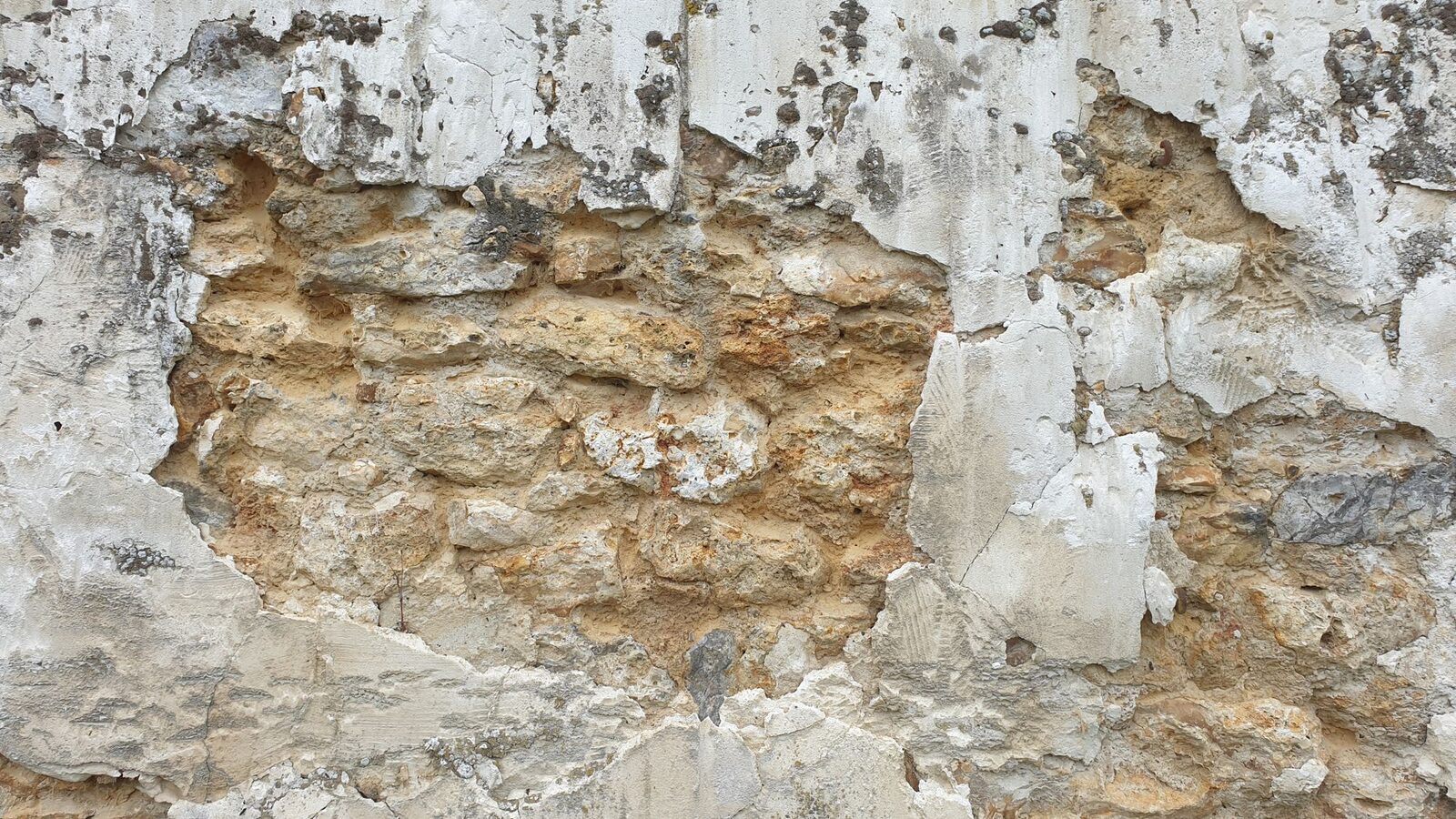
What is salt damp?
The technical guide Salt attack and rising damp, by David Young, states: “Salt damp is used throughout this guide to mean the combination of salt attack and rising damp.” Its glossary calls it “A term originating in South Australia”.
The guide treats them as “two separate but interrelated processes”. Rising damp “is caused by capillary suction of the fine pores or voids that occur in all masonry materials”, which draws water from the soil up into the wall. Salt attack is “the decay of masonry materials such as stone, brick and mortar by soluble salts forming crystals within the pores of the masonry.” The salt, it says, “commonly comes from the soils beneath”, and its list of sources also includes sea-spray at coastal sites, air-borne salts and salt naturally occurring in the stone, brick clay or mortar sand. On its own, the guide says, rising damp causes wet walls and musty smells but limited decay, except in particularly susceptible materials; it is when salt is present that the two “cause substantial decay”. Signs it describes include blistering of paint, loss of plaster, and a damp zone at the base of walls “with associated fretting and crumbling of the masonry”.
Why is salt damp linked with Adelaide?
The guide, published in 2008, states: “Adelaide is well known for its bad salt damp; this is because it has hot drying summers and very salty soils”. It also records that the South Australian government established a Salt Damp Research Committee, which operated from 1974 to 1982.
At council level, the City of Norwood Payneham & St Peters fact sheet states: “Rising damp is a common problem in Victorian and Edwardian houses in Norwood, Payneham & St Peters.” Neither source gives a percentage of affected houses. The City of Adelaide lists the guide as a heritage resource.
Why does salt damp matter in older masonry?
Older walls may have no barrier, or one that no longer works. The guide states: “Many nineteenth century buildings in Australia were built without DPCs”, and that “some DPCs have failed, been bridged, or damaged”. The Norwood fact sheet, writing about its own area, says almost all houses were built with some form of damp proof course below floor level. The guide cautions that existing DPCs “should not be assumed to be defective simply because they are old.”
Time is the other factor. The guide says salts accumulate slowly, and uses a graph it describes as notional to show “a long period of almost no decay” followed by rapid acceleration once the salt has filled the pores. It lists four factors that must all be present: permeable masonry, available moisture, available soluble salts and evaporation.
The guide says salt damp can be “particularly problematic in cavity walls because of the risk of decay inside the cavity where it cannot be seen”.
What do the sources say causes it, and what should be looked at?
The Norwood fact sheet lists factors including poor roof or site drainage, built-up ground or paving levels against outside walls, inappropriate pointing or rendering, painted external walls, inadequate damp proof courses, nearby garden watering systems and leaking plumbing. The guide adds that “Rising damp is often caused by bridging the damp-proof course”, for example by render, raised paving or garden beds.
Not all damp is rising damp. The guide separates falling and penetrating damp, and asks whether the problem is “just condensation on internal surfaces”. Its diagnostic questions include whether there is a DPC, whether the damp is uniform or localised, whether there are signs of previous treatment, and the condition of underfloor spaces and wall cavities.
On meters: “Moisture meters should never be used as the sole basis for diagnosing a damp problem.” On soils, the guide says of a building: “If it is founded on reactive (expansive) clay soils excessive drying could lead to structural cracking as a result of differential settlement.” The guide advises seeking independent advice, “so avoiding bias towards any particular commercial treatment”.
Does rising damp go away, and can it be fixed?
The guide describes cases that are managed and cases that can be cured, and the outcome depends on the cause. It says the upward flow is often continuous, “slowing or stopping only in dry weather and particularly during droughts”, and advises inspecting before and after a dry spell, because rain may have washed salts back into the walls.
Diagnosis can also show that the problem is something else: “after diagnosing that the problem is actually a broken downpipe in Step 1 and then repairing it in Step 2, there may be nothing more to do.” Where salt has built up, it states that “repairs will only be successful if they include treatment of both the damp and the salt.” If a new DPC is inserted but salts stay in the wall above it, “decay will continue, albeit at a slower rate.” Of a new damp-proof course it says: “Done well, it can provide a permanent cure to rising damp to the masonry above the DPC; an important proviso is that salts must also be removed.”
The guide sets out Seven Key Steps: diagnosis, good housekeeping, treating mild damp sacrificially, removing excessive salts, reviewing results, inserting damp-proof courses and desalinating walls. It states that “Not all steps will be necessary in every case”. This note does not recommend any step, product or method; which applies to a wall is for independent advice on that building.
What does the NCC ask of new work in South Australia?
South Australia replaces the rising damp Performance Requirement. SA H2P3(1) requires that “Moisture from the ground must be prevented from causing” undue dampness or deterioration of building elements, and unhealthy or dangerous conditions or loss of amenity for occupants. SA H2P3(2) requires that barriers installed to prevent transfer of moisture from the ground have “high resistance to moisture penetration”, “high resistance to damage during construction” and “high resistance to degradation by dissolved salts.”
Section 4 of the Housing Provisions is one Deemed-to-Satisfy route for footings and slabs, usable within the limits in H1D4(2) of Volume Two. On that route, SA 4.2.8 requires a continuous damp-proofing membrane under slab-on-ground construction for all Class 1 buildings, and some Class 10 buildings. Clause 5.6.2(6) of the Housing Provisions lists Exposure class masonry units as suitable for severe conditions including “below the damp-proof course in areas where walls are expected to be attacked by salts in the ground water or masonry itself (salt attack or salt damp)”.
A Performance Solution is the alternative to Deemed-to-Satisfy Provisions. The guide, in 2008, said the BCA “is generally applied to new buildings and new building work only”. Whether and how current rules reach work on an existing house is set by the Act, Regulations and Code, and is confirmed with the council for that address; building rules consent may come from a private certifier.
The ABCB records that NCC 2025 was published on 1 May 2026, and lists South Australia as “BCA: 1 May 2027 / PCA: 1 May 2026”. Which edition applies to a particular application is for the relevant authority or building certifier to confirm.
Damp proof course in brick veneer: what applies in SA?
Clause 5.2.4 states that for masonry veneer “Damp-proof courses and flashing materials must be in accordance with 5.7.3 and 5.7.4.”
In South Australia, SA H2D4(2) lists “AS 3700 - Masonry structures” or “AS 4773 - Masonry for small buildings, Parts 1 and 2” as the Deemed-to-Satisfy routes for weatherproofing of masonry; Part 5.7 is not listed there, though the national H2D4(2) lists it. How the two fit for a particular wall is for the relevant authority assessing the building work to confirm.
SA H2D4(3) states that “metals and bitumen-coated metals referred to in clauses 7.2. and 7.3 of AS/NZS 2904 are not acceptable materials for use as damp-proof courses in South Australia”. SA H2D4(4) provides that in low rainfall intensity areas where the site classification is A, S, M, M-D, H, H1, H2, H-D, H1-D or H2-D in accordance with AS 2870, the height of the damp-proof course may be “15 mm above finished paved, concreted or landscaped areas” or “0 mm if the damp-proof course is protected from the direct effects of the weather by a carport, verandah or the like.” In the national Part 5.7 text, clause 5.7.4(2) lists heights including 150 mm above adjacent ground level. The guide’s “about 200 mm” above ground or paving is its advice for older buildings, not an NCC figure.
Common Questions
What is salt damp?
Salt damp is the combination of rising damp and salt attack, according to the technical guide Salt attack and rising damp (David Young, 2008), produced for heritage bodies in three states and Adelaide City Council. Capillary suction draws soil moisture into masonry, and soluble salts crystallise in the pores as the water evaporates, causing fretting and loss of surface. The guide says the salt commonly comes from the soil and lists other sources, such as sea-spray and salt in the masonry materials. It records salt damp as a term originating in South Australia.
Is salt damp common in Adelaide?
The 2008 technical guide Salt attack and rising damp states that “Adelaide is well known for its bad salt damp”, citing hot drying summers and very salty soils. The City of Norwood Payneham & St Peters fact sheet calls rising damp “a common problem in Victorian and Edwardian houses” in that council area. Neither source gives a percentage of houses affected, and neither says whether a particular house has it; that takes an inspection of the building.
Does rising damp go away on its own?
The technical guide Salt attack and rising damp (2008) describes an upward flow that often continues, “slowing or stopping only in dry weather and particularly during droughts”, and says rain can wash salts back into the walls, making their presence less obvious. It also says diagnosis may show that a damp problem is actually a broken downpipe, and that after the repair there may be nothing more to do. The sources read do not support a general answer for every wall, and the guide advises independent diagnosis.
Can rising damp be fixed?
It depends on the cause and the salt in the wall. The technical guide Salt attack and rising damp (2008) says repairs will only be successful if they treat both the damp and the salt once salt concentrations are high enough to cause damage, that some approaches manage the problem rather than cure it, and that a new damp-proof course, done well, can cure rising damp in the masonry above it provided salts are also removed. Its Seven Key Steps start with diagnosis and good housekeeping, and it notes not all steps are needed in every case. It advises independent advice to avoid bias towards a commercial treatment. This note does not recommend a treatment.
Does brick veneer need a damp proof course in SA?
NCC 2022 Housing Provisions clause 5.2.4 states that damp-proof courses and flashing materials for masonry veneer must be in accordance with 5.7.3 and 5.7.4. In South Australia, SA H2D4(2) of Volume Two lists AS 3700 or AS 4773 Parts 1 and 2 as the Deemed-to-Satisfy routes for weatherproofing of masonry, and Part 5.7 is not listed. For the purposes of that route, SA H2D4(3) excludes the metals and bitumen-coated metals it identifies as damp-proof courses, and SA H2D4(4) gives alternative heights only for the low rainfall intensity areas and site classifications it lists. A Performance Solution is another route, and the relevant authority assessing the building work confirms how these fit for a wall.
What does the NCC say about salt damp in new South Australian houses?
SA H2P3 in NCC 2022 Volume Two requires that moisture from the ground be prevented from causing undue dampness, deterioration, unhealthy or dangerous conditions or loss of amenity, and that barriers have high resistance to moisture penetration, damage during construction and degradation by dissolved salts. That is a Performance Requirement. Deemed-to-Satisfy Provisions include SA H2D4 on masonry and SA 4.2.8 on the damp-proofing membrane under slabs, and a Performance Solution is the other route. Whether these reach work on an existing house is confirmed with the council for that address.
Sources
- David Young, Salt attack and rising damp: A guide to salt damp in historic and older buildings (2008), for Heritage Council of NSW, Heritage Victoria, SA Department for Environment and Heritage and Adelaide City CouncilAccessed 2026-11-02
- City of Norwood Payneham & St Peters — Fact Sheet, Heritage Buildings: Rising Damp & Salt AttackAccessed 2026-11-02
- City of Adelaide — Heritage resourcesAccessed 2026-11-02
- NCC 2022 Volume Two — Schedule 8 South Australia, Part H2 Damp and weatherproofing (SA H2P3, SA H2D4)Accessed 2026-11-02
- NCC 2022 Volume Two — Part H2 Damp and weatherproofing (H2P3, H2D4)Accessed 2026-11-02
- NCC 2022 ABCB Housing Provisions — Schedule 8 South Australia, Part 4.2 (SA 4.2.8)Accessed 2026-11-02
- NCC 2022 ABCB Housing Provisions — Schedule 8 South Australia (variations index)Accessed 2026-11-02
- NCC 2022 Volume Two — Part H1 Structure (H1D4)Accessed 2026-11-02
- NCC 2022 ABCB Housing Provisions — Part 5.2 Masonry veneer (clause 5.2.4)Accessed 2026-11-02
- NCC 2022 ABCB Housing Provisions — Part 5.6 Masonry components and accessories (clause 5.6.2)Accessed 2026-11-02
- NCC 2022 ABCB Housing Provisions — Part 5.7 Weatherproofing of masonry (clause 5.7.4)Accessed 2026-11-02
- ABCB — NCC 2025 state and territory adoption informationAccessed 2026-11-02
This page describes legislation as it stood on the access dates above. It is not legal advice about any particular property.
Planning a rebuild or new build in Adelaide? Start with a free initial consultation.