
Stormwater from a new house in Adelaide goes where the appropriate authority accepts it: a nominated discharge point, the street kerb, a council drain, or a device that keeps some of it on site. The Building Code leaves the position to that authority, and councils publish their own local requirements. This note quotes the NCC 2022 edition and two councils’ own material. Local drainage and road-reserve requirements are confirmed with the council for the address; building rules consent may be granted by a private certifier.
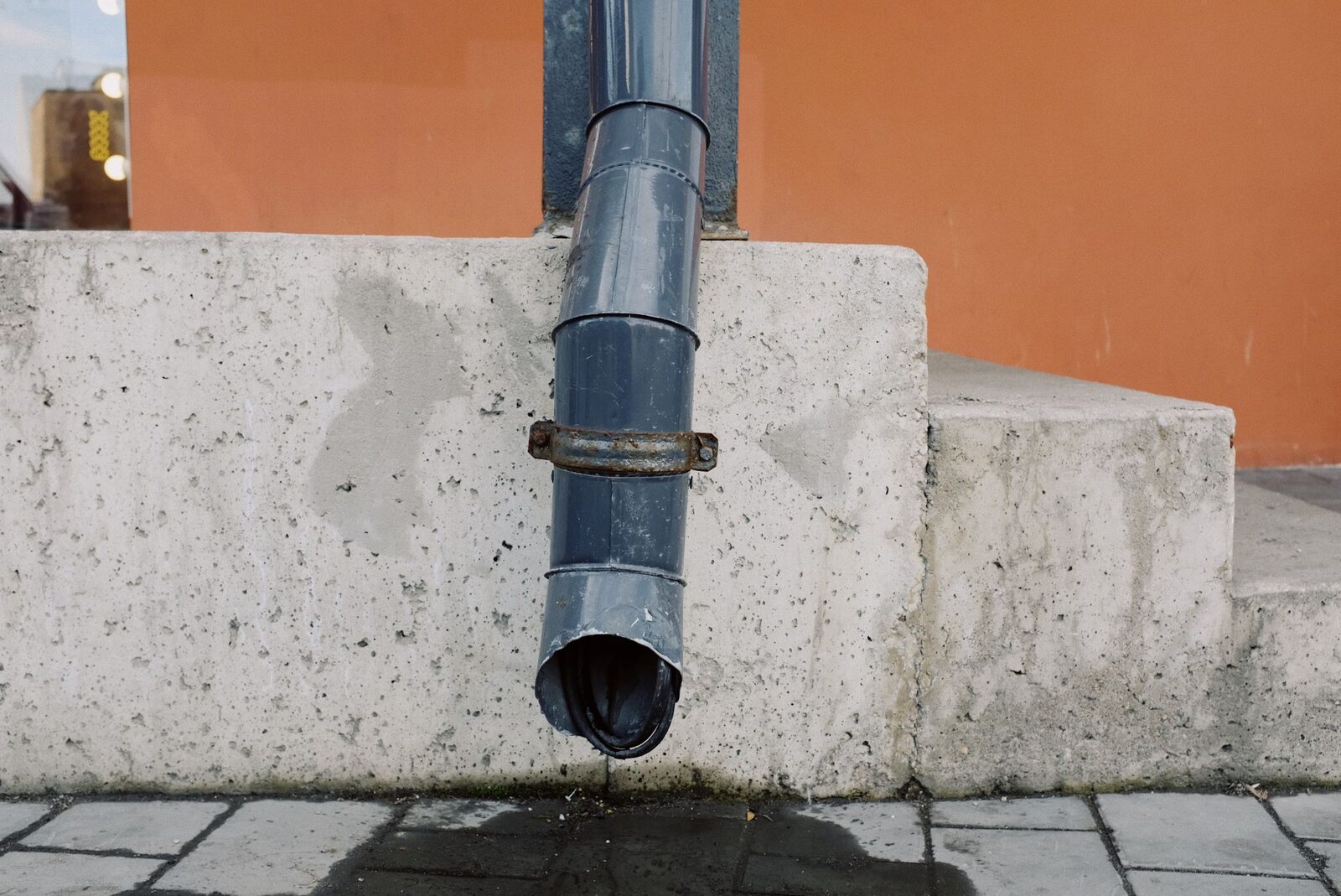
Who decides where stormwater from a new house goes
Clause 3.3.5(a) of the NCC 2022 Housing Provisions states: “The position and manner of discharge of the stormwater drainage system must be to the satisfaction of the appropriate authority.” Clause 3.3.5(b) requires the system to be designed so that overflow in heavy rain is prevented from flowing back into the building.
The explanatory information to that clause gives examples of discharge points that may be acceptable: “a legal discharge point at the allotment boundary”, “on-site catchment systems, such as stormwater tanks”, or “on-site soil drainage systems, such as soaker wells”. The South Australian variations on the ABCB’s Housing Provisions index are to Parts 4.2, 9.2, 10.2 and 13.1; Part 3.3 is not among them.
Which edition of the Building Code applies to a particular application is decided by the relevant authority assessing it.
What a legal point of discharge is
The City of West Torrens explains the term on its stormwater page, as archived in May 2025: “Each property is allocated with a location to direct its stormwater drainage; typically, this location will be to a Council underground drain or to the kerb and channel in the adjacent roadway. This discharge location is known as the Legal Point of Discharge (LPOD).”
The same page states that drainage up to the LPOD “is the responsibility of the property owner. This includes sections of pipe in the nature strip or road reserve that discharge stormwater to the kerb or pipe connections (tapping) to a Council drain.” It also says that where an LPOD does not exist and stormwater cannot all be managed on site, “you need to include the location of the proposed LPOD as part of your application for development approval.” That is West Torrens’ material for properties in its area; another council’s process is found on that council’s own pages.
Stormwater to the street kerb: the kerb outlet and road reserve
A pipe from the property boundary to a street kerb enters the road reserve; the road authority and the council’s connection-permit process for that address are checked first. West Torrens states that “Any works needed to be undertaken in a road reserve will also require Council approval”, either alongside the development assessment or through a separate application for a domestic stormwater connection.
The City of Holdfast Bay publishes its conditions on its Stormwater Pipe Connection 221 Form page. They include a pipe diameter between 75 mm and 100 mm, drains running at 60 to 90 degrees to the kerb and angled in the direction of the street water-table flow, connections generally at least two metres from street trees (for trees of a legislative status, proximity is determined by the council’s Senior Urban Forest Officer), kerbing saw-cut rather than broken out, and the note that “A steel kerb adaptor may be used to protect the pipe.” Those are Holdfast Bay’s conditions; other councils set their own.
On-site stormwater retention: MBS 009 and the site plan
Ministerial Building Standard MBS 009, On-site retention of stormwater (Version 2, May 2023), forms part of the Building Rules. Clause 1.3 limits it to Class 1 and 2 dwellings and associated Class 10a buildings “where the relevant authority has directed that on-site stormwater retention devices must be incorporated as part of the stormwater drainage system.” Where it applies, clause 2.1 requires runoff from a storm with an average recurrence interval of 1 in 5 years to be retained on site, and clause 3.2.1 leaves the design table and the percentage of roof runoff to be retained to the relevant authority.
Clause 3.3.1 restricts soakage trenches and wells to certain soil classes under AS 2870, natural slopes of no more than 1 in 10, rock at 1.2 m or deeper and groundwater permanently below 1.5 m, and clause 3.3.3 rules out installing them in fill. The standard ties the use of these devices to the site classification.
On the planning side, the Planning and Design Code (Version 2026.19) includes a Stormwater Management Overlay whose DTS/DPF 1.1 describes rainwater tank storage with retention and, “where detention is required”, a 20–25 mm slow release orifice, as one way for residential development to meet Performance Outcome PO 1.1. It is relevant only where the overlay applies to the property; the zones and overlays for an address are confirmed with the council.
Where a tank is part of the arrangement, Schedule 8 clause 2(1)(a)(xi) of the Planning, Development and Infrastructure (General) Regulations 2017 requires the site plan with an application for planning consent for a new building (clause 2 applications) to show “the location and capacity of any proposed water tank, the connection type, the total roof area to be connected to the tank and the proportion of the tank to be used for retention or detention”.
The stormwater plan in the building documentation
Schedule 8 clause 4(1)(a) of the same Regulations requires the site plan with an application for building consent to show “the levels of the site and of the floors of the proposed building in relation to any street drainage channel or council drain” and “the method of drainage and services proposed to be used”.
SA.GOV.AU’s page on certificates of compliance lists “installing stormwater systems” among plumbing work for which a certificate of compliance is not required, alongside changing tap washers and clearing blocked drains. Stormwater discharge remains subject to clause 3.3.5(a), which refers to the “appropriate authority”, and to the council’s local requirements.
Neighbours and stormwater
Performance Requirement H2P1(1) of NCC 2022 Volume Two states that surface water from a storm with an annual exceedance probability of 5% “which is collected or concentrated by a building or sitework, must be disposed of in a way that avoids the likelihood of damage or nuisance to any other property.” The South Australian schedule varies Part H2 at H2P3 and H2D4, not H2P1.
West Torrens’ stormwater page says that problems with overland flows between neighbours “are a matter to be resolved between the respective landowners”, and points to the Legal Services Commission of SA for further information. This note does not attempt to state who is responsible in a particular dispute.
Common Questions
Who decides where stormwater from a new house discharges?
Clause 3.3.5(a) of the NCC 2022 Housing Provisions states that the position and manner of discharge of the stormwater drainage system must be to the satisfaction of the appropriate authority. The requirements for a particular address are confirmed with the council for that address.
What is a legal point of discharge?
The City of West Torrens defines the Legal Point of Discharge (LPOD) as the location allocated to a property to direct its stormwater drainage, typically a council underground drain or the kerb and channel in the adjacent roadway. Other councils describe their own process.
Does a pipe to the street kerb need council approval?
The City of West Torrens states that any works in a road reserve require Council approval, and the City of Holdfast Bay requires property owners to obtain Council permission, through its Stormwater Pipe Connection 221 Form, for construction, replacement or removal of their stormwater drains. Requirements at another address are set by that council.
When does Ministerial Building Standard MBS 009 apply?
Clause 1.3 of MBS 009 states that it applies to Class 1 and 2 dwellings and associated Class 10a buildings where the relevant authority has directed that on-site stormwater retention devices must be incorporated as part of the stormwater drainage system.
What must stormwater from a new house avoid doing to neighbouring land?
Performance Requirement H2P1(1) of NCC 2022 Volume Two requires surface water from a 5% annual exceedance probability storm, collected or concentrated by a building or sitework, to be disposed of in a way that avoids the likelihood of damage or nuisance to any other property.
Sources
- NCC 2022 ABCB Housing Provisions — Part 3.3 Drainage, clause 3.3.5Accessed 2026-10-19
- NCC 2022 ABCB Housing Provisions — Schedule 8 South Australia (variations index)Accessed 2026-10-19
- NCC 2022 Volume Two — Part H2 Damp and weatherproofing (H2P1)Accessed 2026-10-19
- NCC 2022 Volume Two — Schedule 8 South Australia, Part H2Accessed 2026-10-19
- PlanSA — Ministerial Building Standard MBS 009 On-site retention of stormwater, Version 2 (PDF, Wayback Machine snapshot, 4 April 2025)Accessed 2026-10-19
- PlanSA — MBS 009 page listing Version 2 as current (Wayback Machine snapshot, 25 November 2025)Accessed 2026-10-19
- Planning, Development and Infrastructure (General) Regulations 2017 (SA), version 17.9.2026 — Schedule 8 clauses 2 and 4Accessed 2026-10-19
- Planning and Design Code, Version 2026.19 (in effect 8 October 2026) — Part 3 Overlays, Stormwater Management OverlayAccessed 2026-10-19
- City of West Torrens — Stormwater (Wayback Machine snapshot, 16 May 2025)Accessed 2026-10-19
- City of Holdfast Bay — Stormwater Pipe Connection 221 FormAccessed 2026-10-19
- SA.GOV.AU — Certificates of compliance (Wayback Machine snapshot, 16 December 2025)Accessed 2026-10-19
This page describes legislation as it stood on the access dates above. It is not legal advice about any particular property.
Planning a rebuild or new build in Adelaide? Start with a free initial consultation.