
Rough-in, also called first fix, is the stage after the frame is up and before the walls and ceilings are lined, when pipes, cables and other services are run through the frame to the points where fixtures will later be fitted. South Australia’s Office of the Technical Regulator (OTR) lists a plumbing audit category called “Hot & cold (first fix)”, described as “First fix of hot and cold pipework in-wall.” Once plasterboard goes on, that work is hidden, which is why the rules on notifications, audits and certificates are worth knowing at this point. Where this note quotes the National Construction Code, it quotes NCC 2022; the ABCB lists South Australia’s NCC 2025 adoption as “BCA: 1 May 2027” and “PCA: 1 May 2026”.
What does rough-in mean in house building?
None of the South Australian sources read for this note defines “rough-in” in law. The OTR uses “first fix” in its June 2022 advisory note on categories for plumbing audit bookings, listing “Hot & cold (first fix)” as “First fix of hot and cold pipework in-wall.” The same note lists “Above ground sanitary plumbing” as “Any sanitary plumbing or drainage suspended above ground, including soil and waste stacks.”
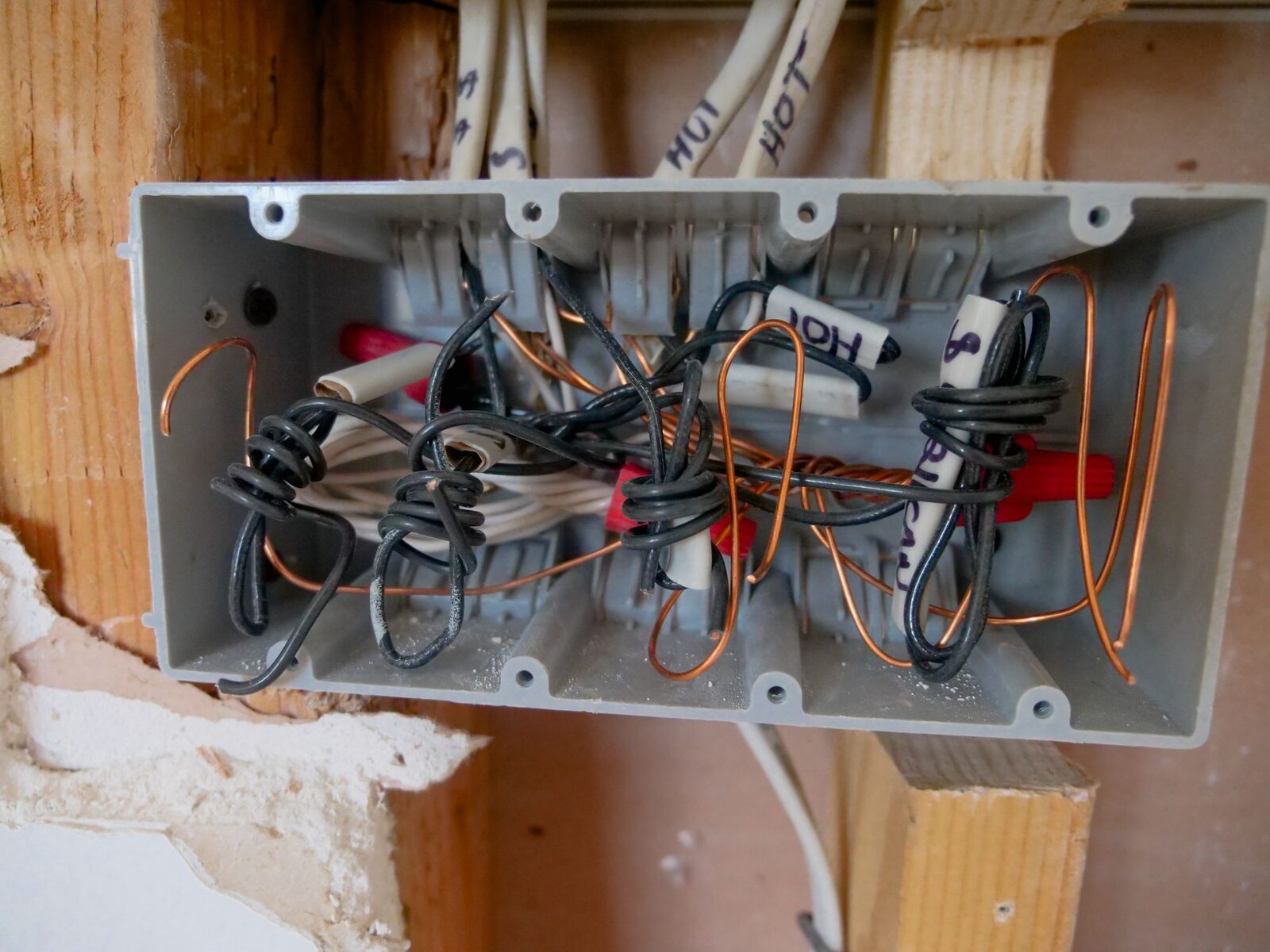
In general terms, the rough-in stage covers the parts of each service that will end up inside walls, floors and ceilings: water and waste pipes, electrical cabling and boxes, data and antenna cabling, gas lines where the house has gas, and ducting. The visible items (taps, basins, switches, light fittings) are fitted later, at fix-out, after linings and wet-area waterproofing.
Does the council inspect at the rough-in stage in SA?
Regulation 93(1) of the Planning, Development and Infrastructure (General) Regulations 2017 prescribes the notifications to the council during building work. It lists: “1 business day’s notice of the intended commencement of building work on the site”; notice of the commencement of “any stage of the building work specified by the council” when development approval is granted; notice of the intended completion of any stage the council specifies in writing on granting approval; “1 business day’s notice of any stage specified by a relevant authority when giving a building consent”; notice before installing a designated building product on a designated building; and “1 business day’s notice of the intended completion of the building work.”
None of those items is named “rough-in” or “pre-plaster”. Whether a council or relevant authority specifies a stage at that point for a particular house is set out in the approval documents for that address. Regulation 93(4a) states that the regulation “only applies to building work that constitutes development for the purposes of the Act.”
The Consumer and Business Services consumer guide (January 2025) states that “Your local council may carry out inspections and discuss building practices with your builder at various stages of the building work.”
Who books a plumbing inspection before the walls are closed?
The Plumbing Standard is published under the Water Industry Act 2012. The Plumbing Standard published by the Technical Regulator (dated 14 May 2026) applies to licensed plumbing contractors, licensed building work contractors contracting for plumbing work, and registered plumbing workers. It requires them to comply with the relevant parts of the Plumbing Code of Australia “as amended from time to time”.
Item 2(e) of the Standard states that “Persons Constructing, installing, replacing, repairing, altering and maintaining pipes or any other equipment, products or materials used in connection with plumbing are required to book the following plumbing categories for audit with the Office of the Technical Regulator”, listing: “Sanitary plumbing and drainage systems”; fire-fighting water services (in-ground pipework and testable backflow prevention devices only); automatic fire sprinkler system installations of a listed type; “Greywater plumbing and drainage systems”; “Non-drinking water services”; drinking water services in parks and recreational areas; final inspections of completed commercial plumbing installations; and “Such other plumbing categories as determined by the Technical Regulator.”
The OTR’s plumbing trades page states: “Licensed plumbers in South Australia are required to book plumbing and drainage audits.” If the plumber can’t access MyPlumbbooking through the eCoC portal, the page states that “the plumber must not backfill or cover up the installation until 20 minutes after the nominated Plumbbooking time”. The OTR’s plumbing trades page requires final-audit bookings for installations incorporating a Performance Solution or greywater system, as well as commercial/industrial installations; it separately states that residential final-audit bookings are not required and that contractors are contacted for sampled audits.
What does the OTR say about pipes concealed in walls?
The OTR’s advisory note “Support and fixing of plastic water services” (June 2024) states that plumbers “are required to book an audit for ALL Non-drinking water in-wall installations, at which time, all in-wall pipework will be audited.” The OTR’s June 2022 note on booking categories describes “Non-drinking water in wall” as “Non-drinking water service pipework within a building.”
For concealed piping it says: in timber frames, “Uninsulated water services require a collar of lagging material, or neutral cure silicone sealant to fill the annular space (max 25mm Dia) in holes or notches”; in metal wall framework, water services “are required to be protected with suitable grommets, insulation, or a short sleeve of oversized pipe secured in the framework, these are not an above ground fixing”. It adds: “Stud clips fixings that are designed to insert around the pipe and isolate contact from the timber or steel frame meet the requirements of an above ground fixing - silicone or lagging does not.” And: “Water services installed above ground must [be] kept in position by brackets, clips or hangers. Silicone, plastic grommets, chips of wood are not an approved fixing solution for supporting pipes.”
The same note sets out a separation of “at least 25mm” between any above-ground water service and electrical or telecommunications conduits, wires or cables, consumer gas pipes, sanitary plumbing and drainage, stormwater drainage, other above-ground water services and any other services. The note cites AS/NZS 3500.1:2021 and AS/NZS 3500.4:2021 for these requirements; this note quotes the OTR, not the Standards.
What about electrical rough-in?
The OTR’s electrical trades page states: “Electricians must issue an eCoC to customers after completing any electrical work. These are legal documents, required by law under the Electricity Act 1996.” One stated purpose of the certificate is to “allow the Office of the Technical Regulator to audit electrical installations for safety and technical compliance.”
It also states that the OTR’s Electrical trades section “has the authority to audit electrical installations, electrical workers, and electrical contractors at random or in response to complaints.” The sources read for this note do not set a separate inspection booking for electrical cabling before linings. Certificates for plumbing, gas and electrical work are covered in their own note.
What else goes in before plaster?
Wall insulation is installed in the frame before linings. In the national text of the NCC 2022 Housing Provisions, clause 13.2.2(1) states that, where required, insulation must comply with AS/NZS 4859.1 and be installed so that it “abuts or overlaps adjoining insulation other than at supporting members such as columns, studs, noggings, joists, furring channels and the like where the insulation must butt against the member”, “forms a continuous barrier with ceilings, walls, bulkheads, floors or the like that inherently contribute to the thermal barrier”, and “does not affect the safe or effective operation of a domestic service or fitting.”
Clause 13.2.2(3) states that, where required, bulk insulation must be installed so that “it maintains its position and thickness, other than where it crosses roof battens, water pipes, electrical cabling or the like”. The explanatory information adds: “Care should be taken when installing insulation to ensure that it does not interfere with the safety or performance of domestic services and fittings such as heating flues, recessed light fittings, light transformers, gas appliances and general plumbing and electrical components.”
Part 13.2 is a Deemed-to-Satisfy Part; clause 13.2.1(3) states that it “must be applied as directed in H6D2(1)(a) or (b)”, and a Performance Solution is the other way to meet the Performance Requirements. South Australia’s energy provisions must also be checked against the applicable MBS 007; this note has not verified its current text, and the relevant authority assessing the building work should confirm the provisions applicable to the application. South Australia’s Schedule 8 to the Housing Provisions varies Part 13.1, Scope and application of Section 13. Whether a particular wall meets the requirements is for the relevant authority assessing the building work.
A pre-plaster checklist for homeowners
A walk-through before linings is the last easy chance to see what will be hidden. Points an owner can compare against the drawings and selections: power points, switches, data and antenna points in the agreed positions and heights; tap and shower mixer positions for the fixtures selected; waste positions for basins, baths and the kitchen; provision for wall-mounted items, such as noggings for grab rails, shelving or a heavy television; wall insulation in place, without gaps at studs and noggings; and photographs of each wall before it is closed, as a record of where the services run. These are points to compare against the drawings, not rules.
Owners are not inspectors, and a walk-through is not a compliance check. The consumer guide notes that an owner “can engage an independent building consultant to carry out inspections at key stages in the building process on your behalf”, and that “it’s best to discuss this with your builder.” Site visits are arranged with the builder, as the site is a workplace.
Common Questions
What does rough-in plumbing mean?
Rough-in plumbing, also called first fix, is the water supply and waste pipework installed inside walls, floors and ceilings before linings go on, ready for taps, basins and other fixtures to be fitted later. South Australia’s Office of the Technical Regulator lists a plumbing audit category “Hot & cold (first fix)”, described as “First fix of hot and cold pipework in-wall.”
Is there a council inspection before plaster in South Australia?
Regulation 93 of South Australia’s Planning, Development and Infrastructure (General) Regulations 2017 requires advance council notifications for building work that constitutes development, including one business day’s notice of intended commencement and intended completion; its designated-product provision concerns installation on a designated building, and additional notified stages depend on the council or relevant authority. None is named “pre-plaster”; whether a stage is specified at that point is set out in the approval for the particular house.
Do plumbers have to book an inspection before the walls are lined in SA?
The South Australian Plumbing Standard published by the Technical Regulator (dated 14 May 2026) requires listed plumbing categories to be booked for audit with the Office of the Technical Regulator, including “Sanitary plumbing and drainage systems” and “Non-drinking water services”. The OTR’s June 2024 advisory note says plumbers must book an audit for all non-drinking water in-wall installations; its June 2022 category note describes “Non-drinking water in wall” as “Non-drinking water service pipework within a building.” The OTR’s June 2022 note on booking categories lists “Hot & cold (first fix)” among the categories a plumber selects when making a booking; the Plumbing Standard’s list in item 2(e) does not name that category.
Who certifies electrical rough-in work in SA?
In South Australia, the electrician certifies the work: the Office of the Technical Regulator states that “Electricians must issue an eCoC to customers after completing any electrical work”, required under the Electricity Act 1996. The OTR also states it has authority to audit electrical installations “at random or in response to complaints.”
What should I check at the pre-plaster stage?
Before plasterboard goes on in a new house, an owner can compare power, switch and data points, tap and waste positions, and noggings for wall-mounted items against the drawings and selections, check that wall insulation is in place, and photograph each wall. Clause 13.2.2(1) of the NCC 2022 Housing Provisions, a Deemed-to-Satisfy provision, states that insulation, where required, must be installed so that it “forms a continuous barrier with ceilings, walls, bulkheads, floors or the like that inherently contribute to the thermal barrier” and “does not affect the safe or effective operation of a domestic service or fitting.” South Australia’s energy provisions must also be checked against the applicable MBS 007; this note has not verified its current text, and the relevant authority assessing the building work should confirm the provisions applicable to the application. A walk-through is not a compliance inspection.
Sources
- Planning, Development and Infrastructure (General) Regulations 2017 (SA), version 29.10.2026 — regulation 93 Notifications during building workAccessed 2026-11-23
- Office of the Technical Regulator — Plumbing Standard Published by the Technical Regulator (Water Industry Act 2012, dated 14 May 2026)Accessed 2026-11-23
- Office of the Technical Regulator — Plumbing trades (Auditing and inspections)Accessed 2026-11-23
- Office of the Technical Regulator — Plumbing Advisory Note: Categories for plumbing audit bookings (June 2022)Accessed 2026-11-23
- Office of the Technical Regulator — Plumbing Advisory Note: Support and fixing of plastic water services (June 2024)Accessed 2026-11-23
- Office of the Technical Regulator — Electrical trades (eCoC; auditing and complaints)Accessed 2026-11-23
- NCC 2022, ABCB Housing Provisions — Part 13.2 Building fabric (clauses 13.2.1 and 13.2.2)Accessed 2026-11-23
- NCC 2022, ABCB Housing Provisions — Schedule 8 South Australia (index of variations)Accessed 2026-11-23
- NCC 2022 Volume Two — Schedule 8 South Australia (index of variations; no Part H6 entry)Accessed 2026-11-23
- Consumer and Business Services — Building, extending & renovating a home: A consumer guide, January 2025 (Wayback snapshot of 27 November 2025), InspectionsAccessed 2026-11-23
- ABCB — NCC 2025 state and territory adoption informationAccessed 2026-11-23
This page describes these sources as they stood on the access dates above. It is not legal advice about any particular property.
Planning a rebuild or new build in Adelaide? Start with a free initial consultation.