
Three sites have published build records that begin with demolition of the existing dwelling: Pooraka SA 5095, Gepps Cross SA 5094 and Keswick SA 5035. Each record was written on its own. Read alongside each other they cover one sequence between them — a standing house, its removal, a cleared block, earthworks, footings and frame — which no single record covers end to end.
The standing house, and then not
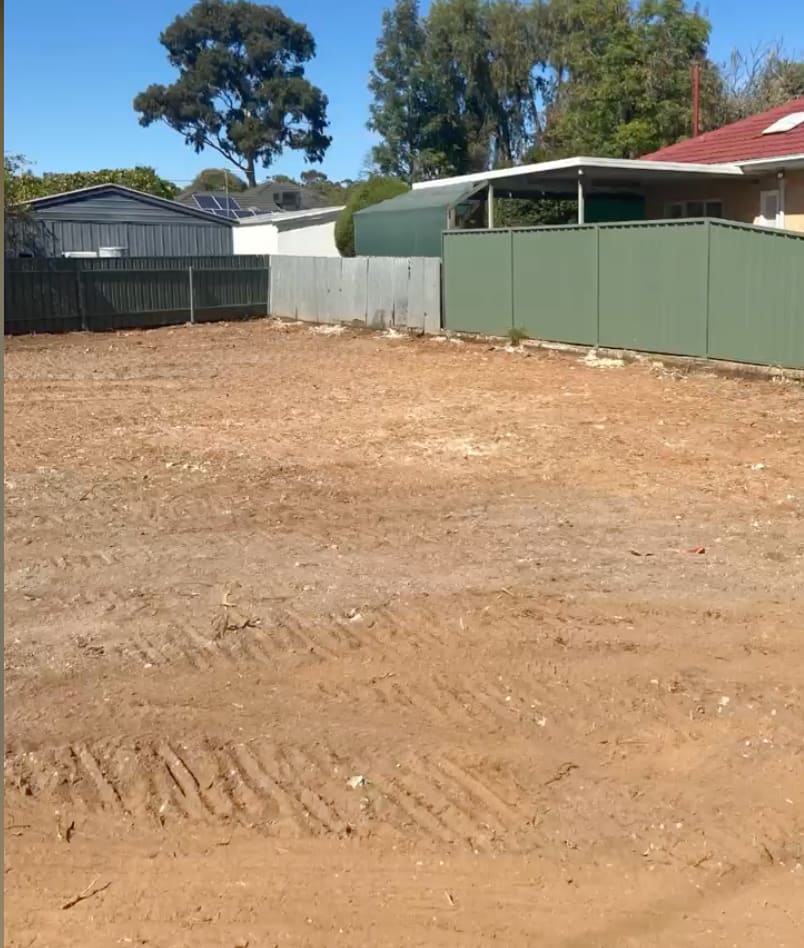
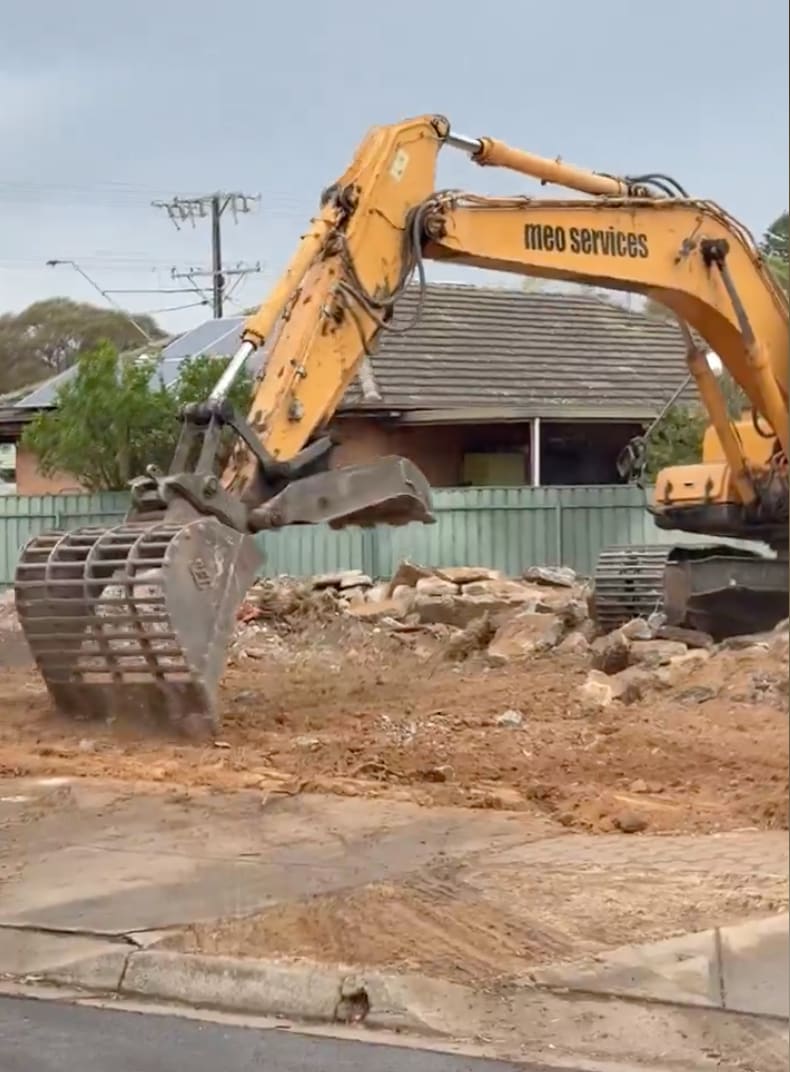
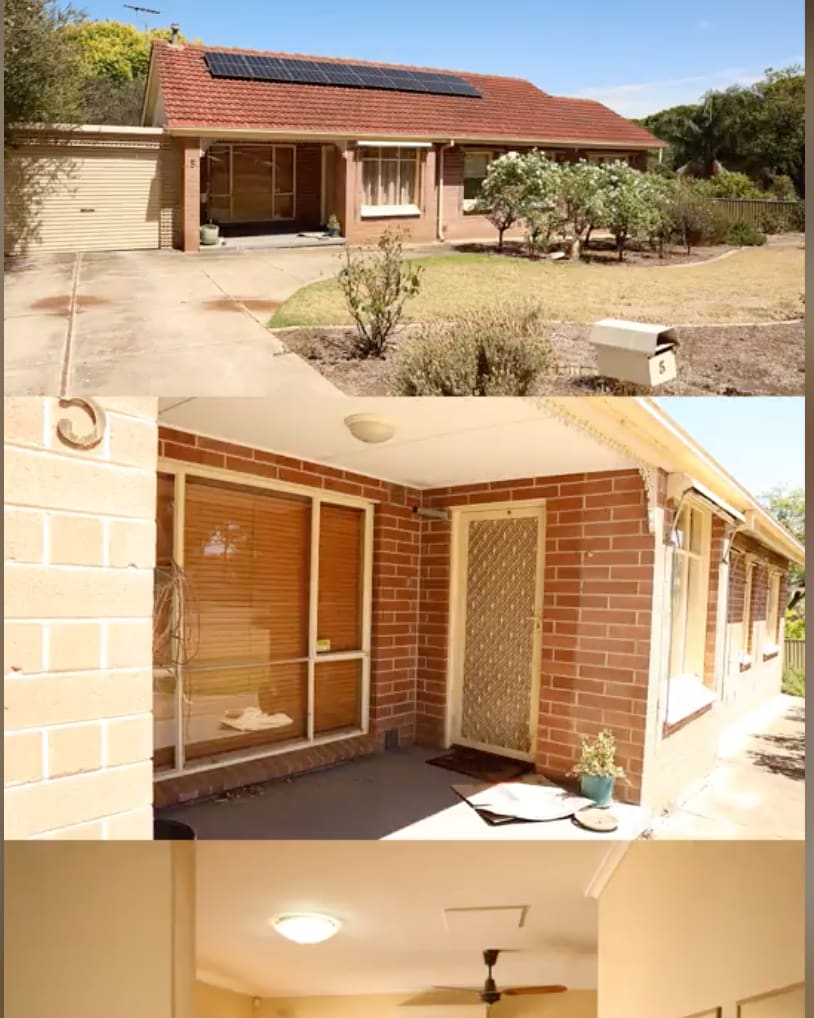
Pooraka is the only one of the three whose record carries the building before it came down as well as after. The original dwelling, the excavator mid-demolition, and the cleared block are three separate images of the same address.
That matters more than it first appears. A cleared block photographs identically whether the house on it was removed last month or the land was always vacant. The before image is what makes the record a record rather than a stock photograph of dirt.
Clearing is not the same as being ready
Gepps Cross covers the part between demolition and construction: the cleared site, then earthworks with an excavator working the ground. Between those two images sits everything the ground has to be brought to before a footing can go in — level, drainage falls, and whatever the previous building left below the surface.
A block that looks finished in the cleared image is not yet a block that can be built on. That gap is where old footings and backfilled service trenches are found, and it is compressible on paper in a way it is not on the ground.
Footings, then frame
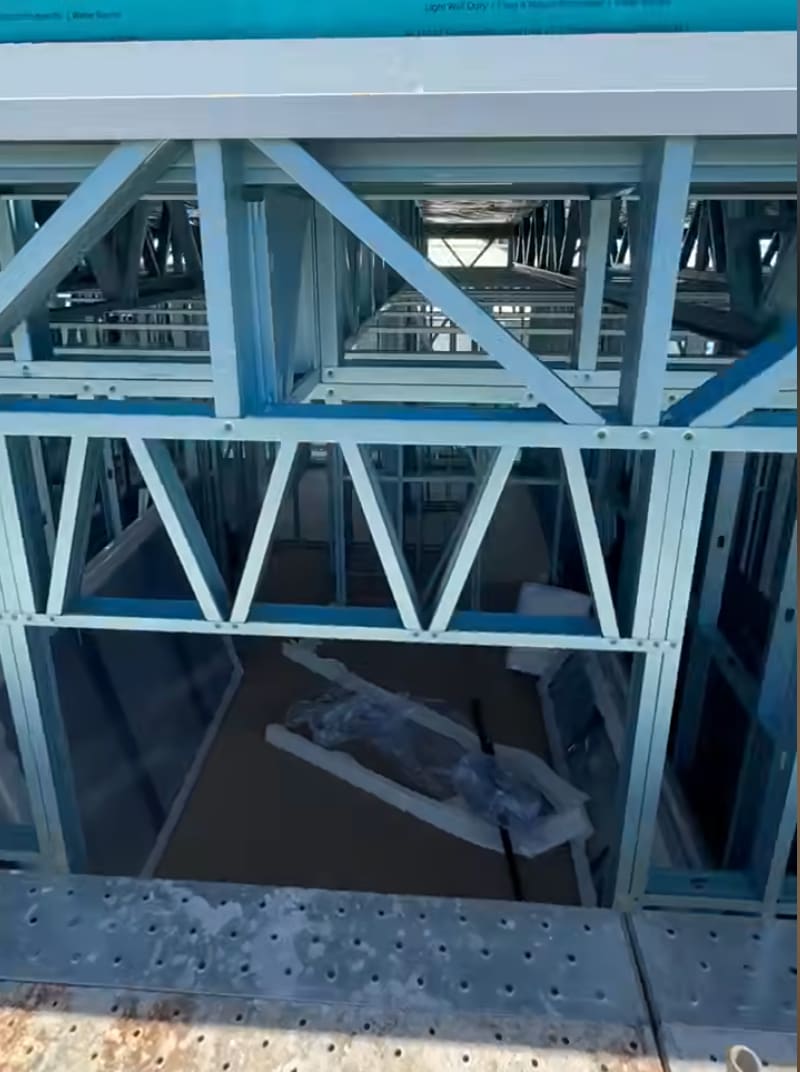
Keswick picks the sequence up where the other two leave it: footing system installed and base concrete poured, then a two-storey steel frame standing on it. Its record is the only one of the three that reaches structure.
Footings are the last point at which the position and level established during setout can still be changed cheaply. After the pour, the building’s footprint and floor level are fixed in concrete in the literal sense.
Why three records and not one
No single site here documents the whole sequence, because each record was written while that site was at a particular point. Together they cover it; separately none of them does.
The practical use of reading them side by side is that the same steps appear in the same order on three different blocks. The order is not specific to any one of them.
Common Questions
What sequence do these three records cover between them?
A standing dwelling, demolition, a cleared block, earthworks, footings and base concrete, and steel frame. Pooraka covers the first three, Gepps Cross the middle, Keswick the last two.
Is a cleared block ready to build on?
Not yet. Clearing removes the structure; the ground still has to be brought to level, drainage falls resolved, and whatever the previous building left below the surface dealt with. Old footings and backfilled service trenches are found during that work rather than before it.
When does the building’s position stop being changeable?
At the footing pour. Position and level are established during setout and can be adjusted up to that point; afterwards the footprint and floor level are fixed.
Want to understand how this capability changes the risk profile of your site, brief or build pathway?